Elastic Electronic: Soft Sensors
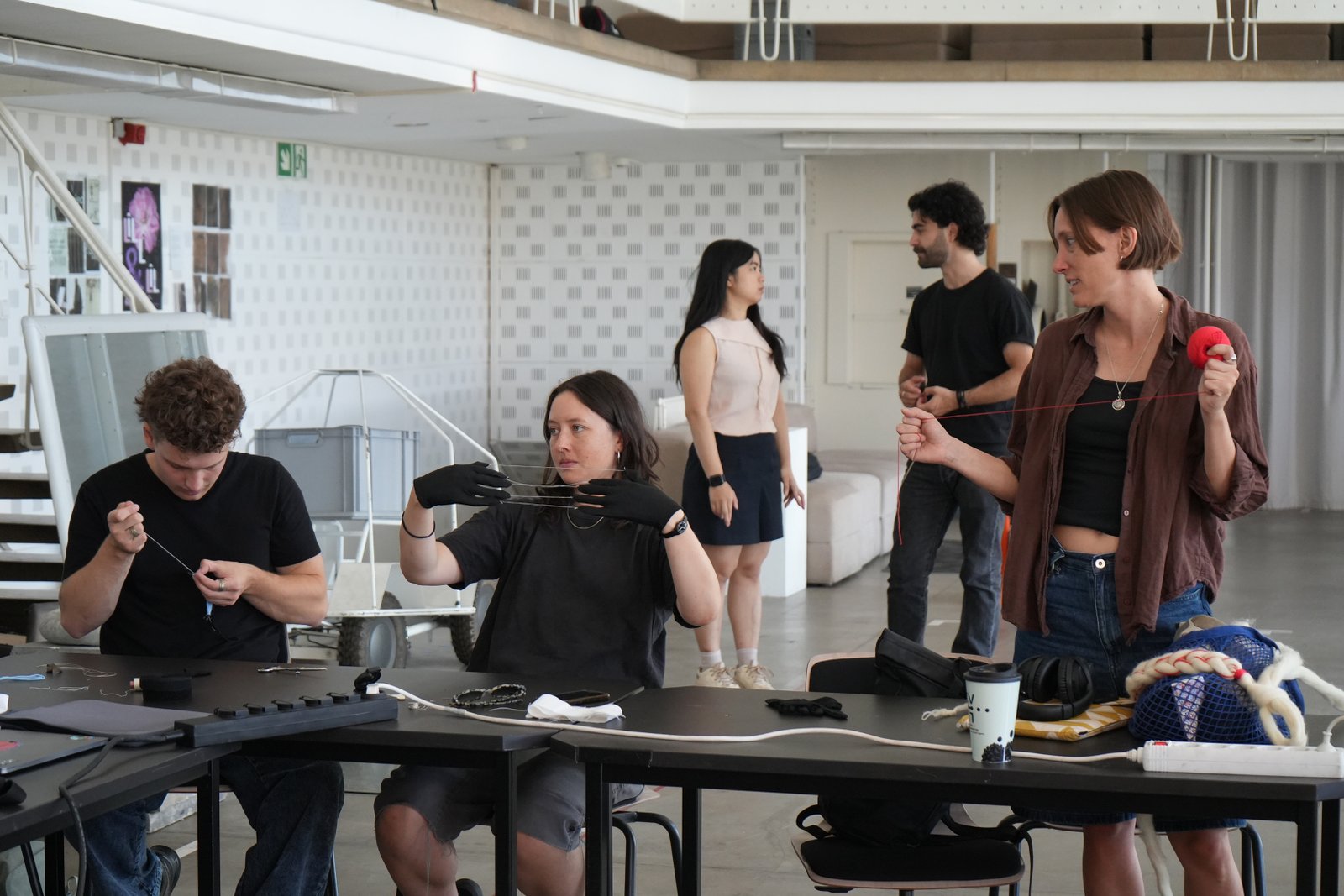
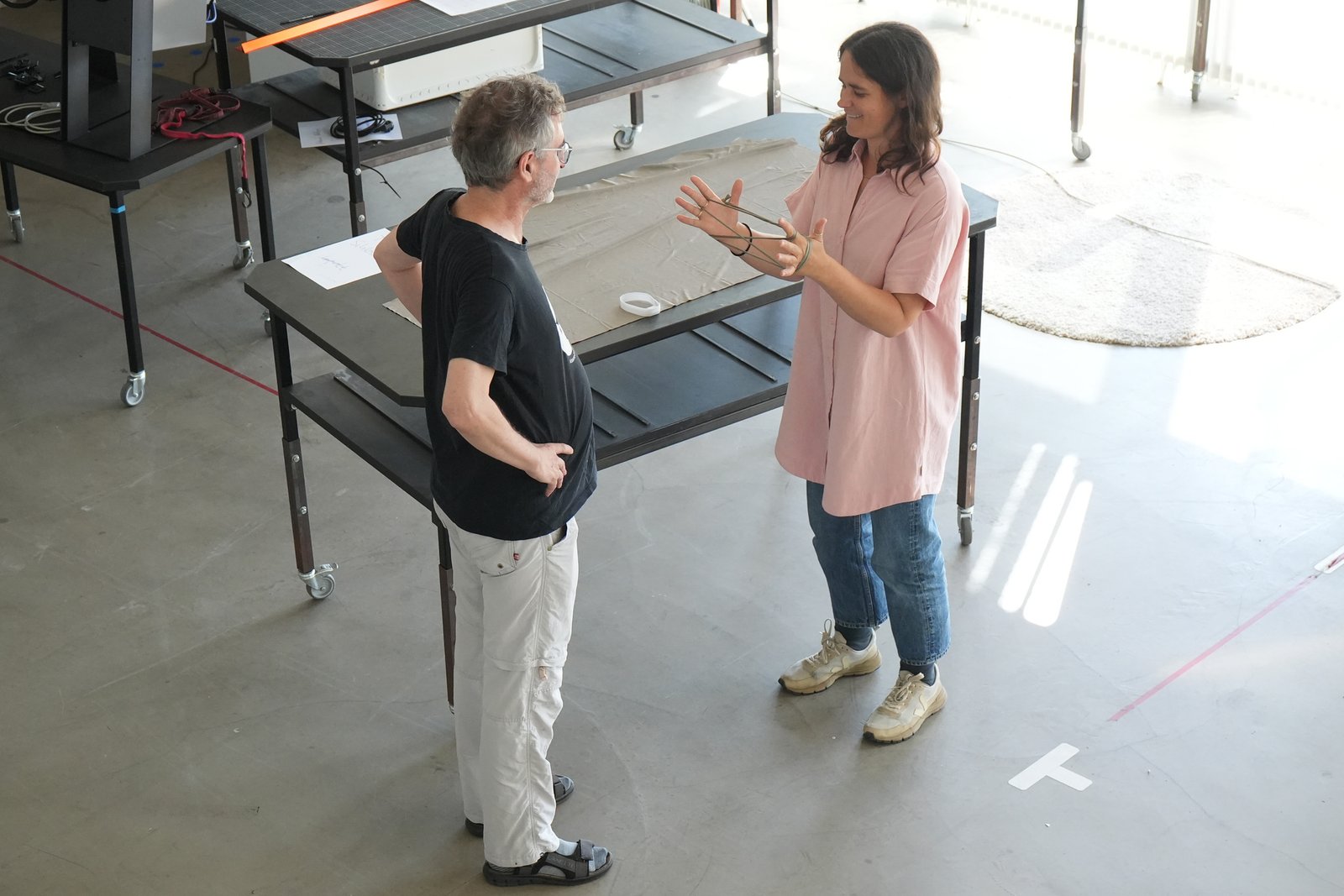
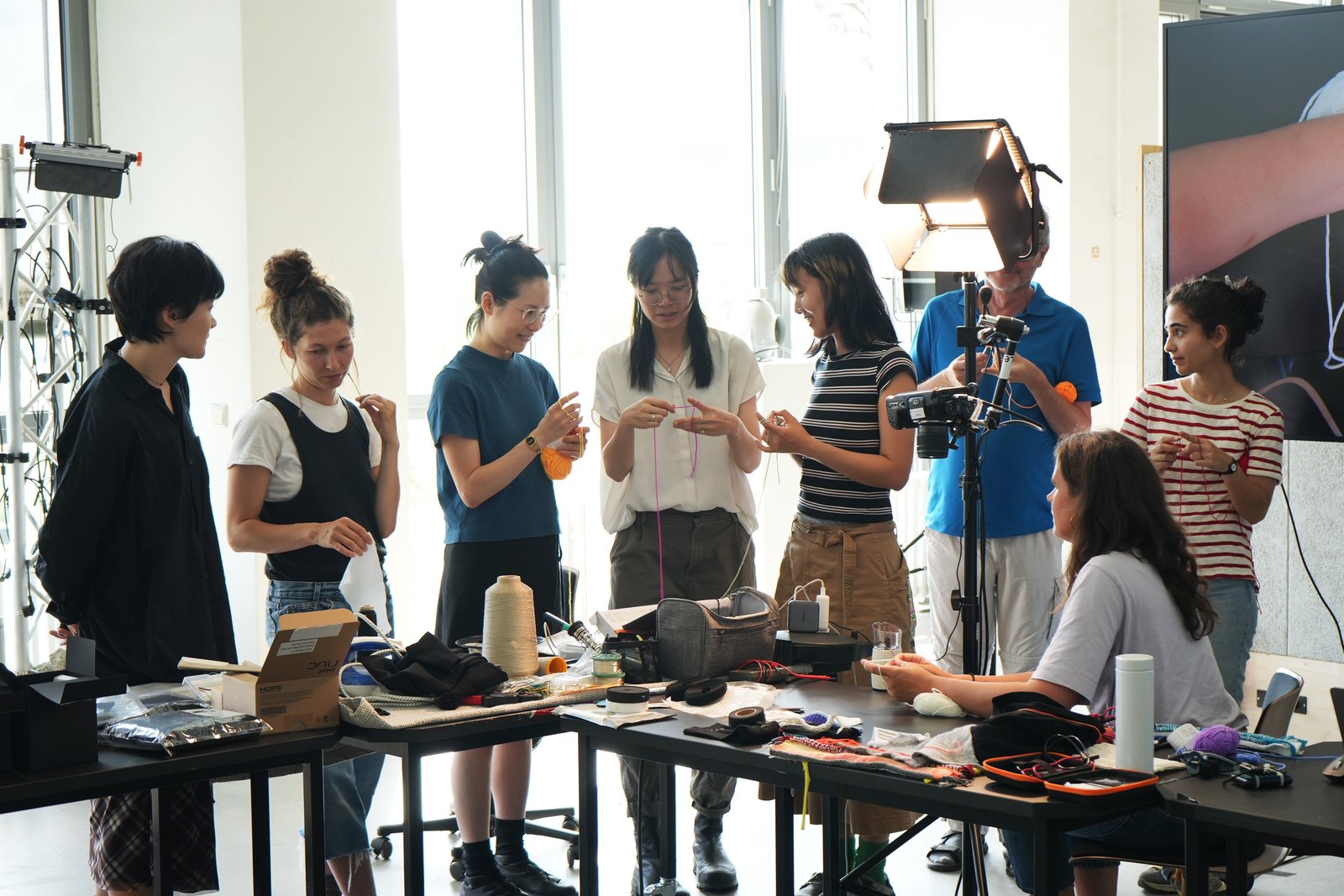
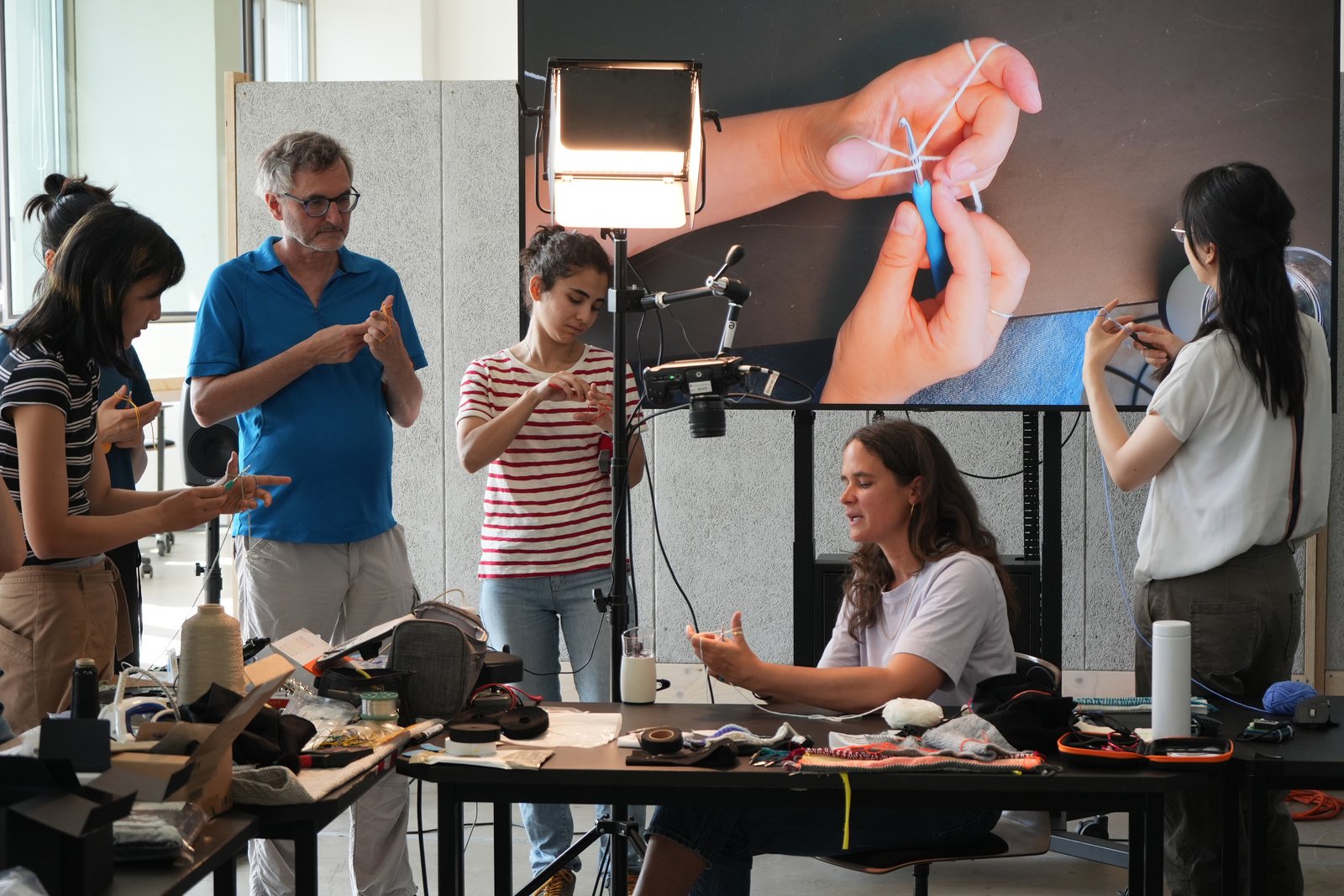
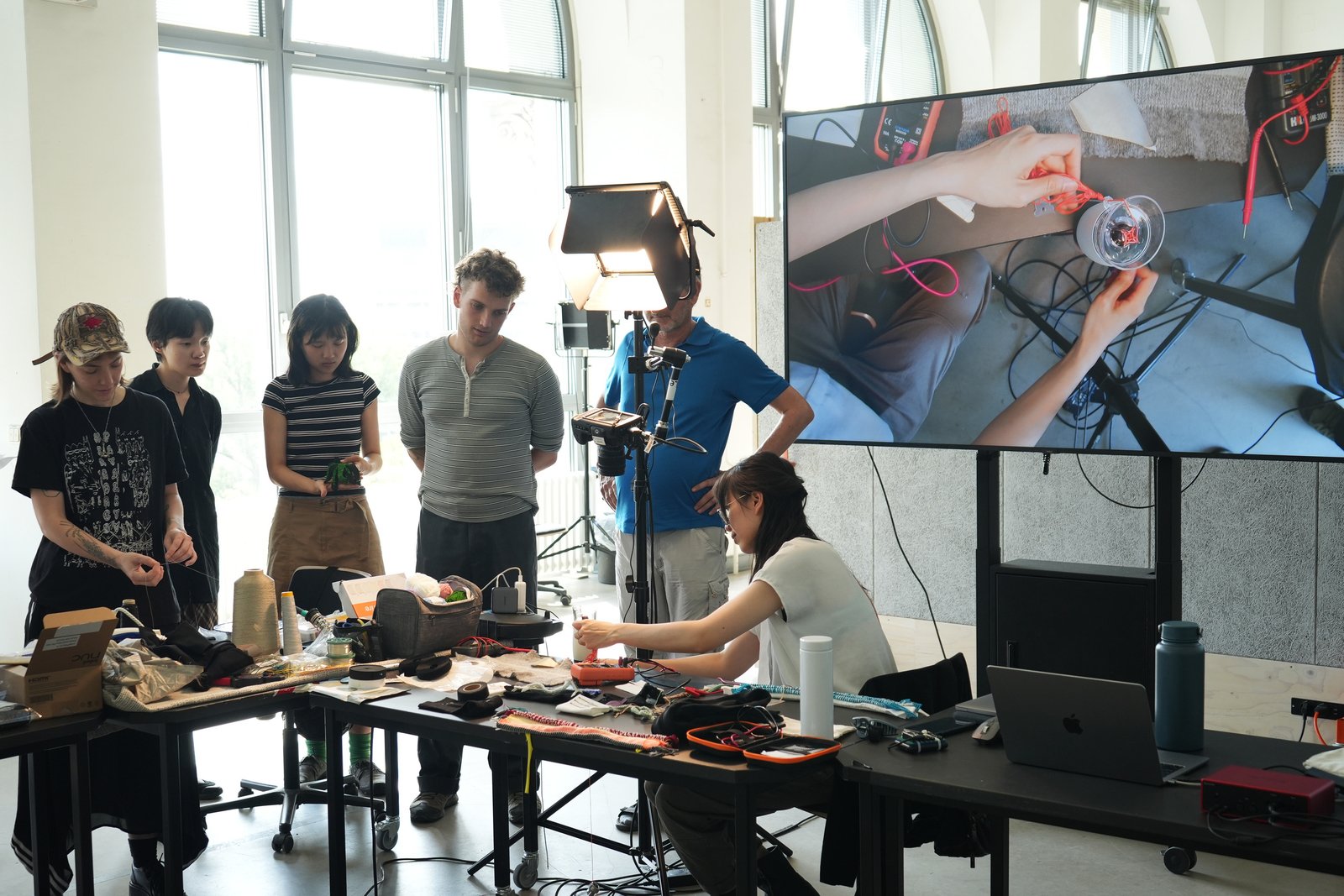
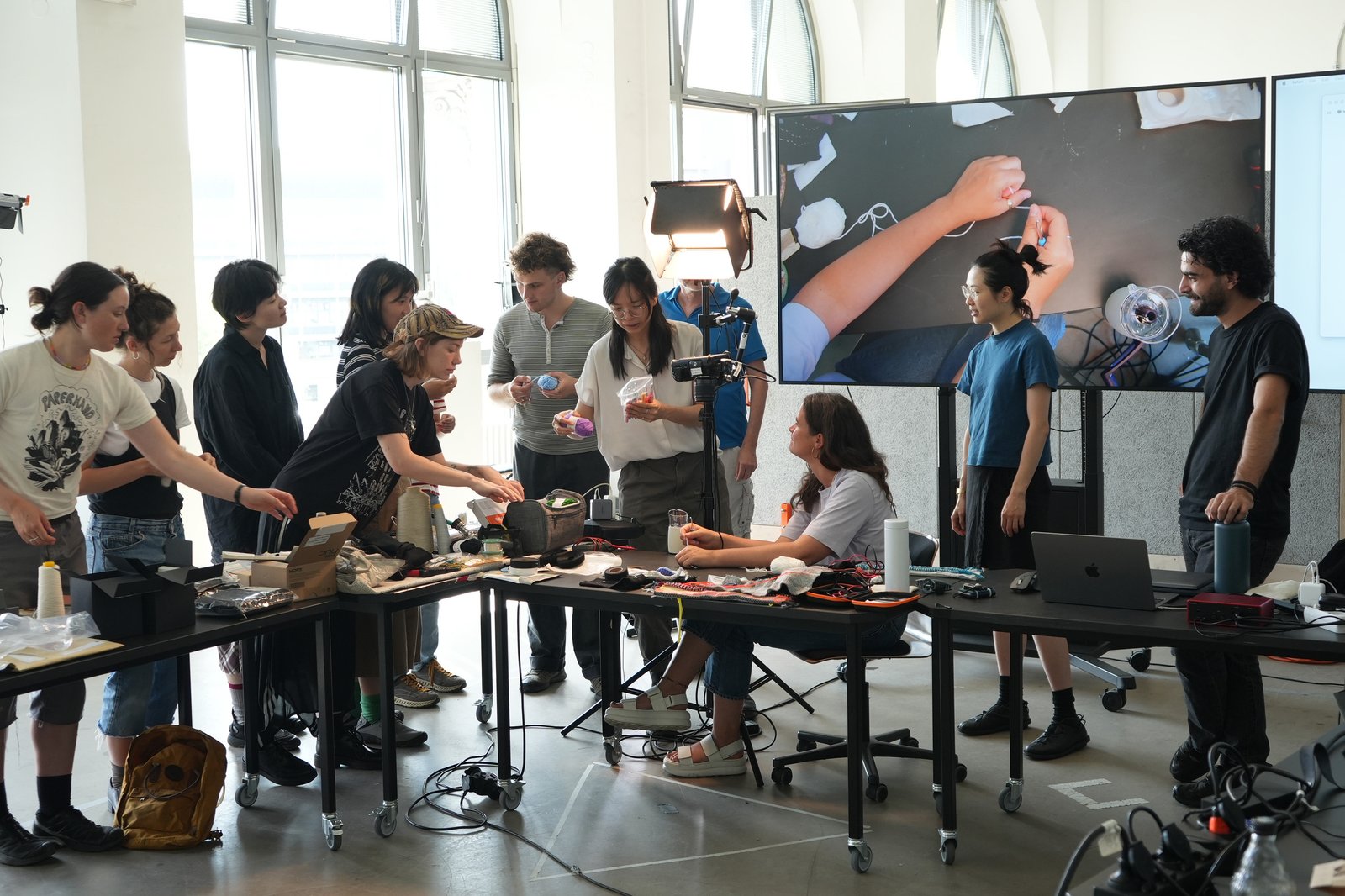
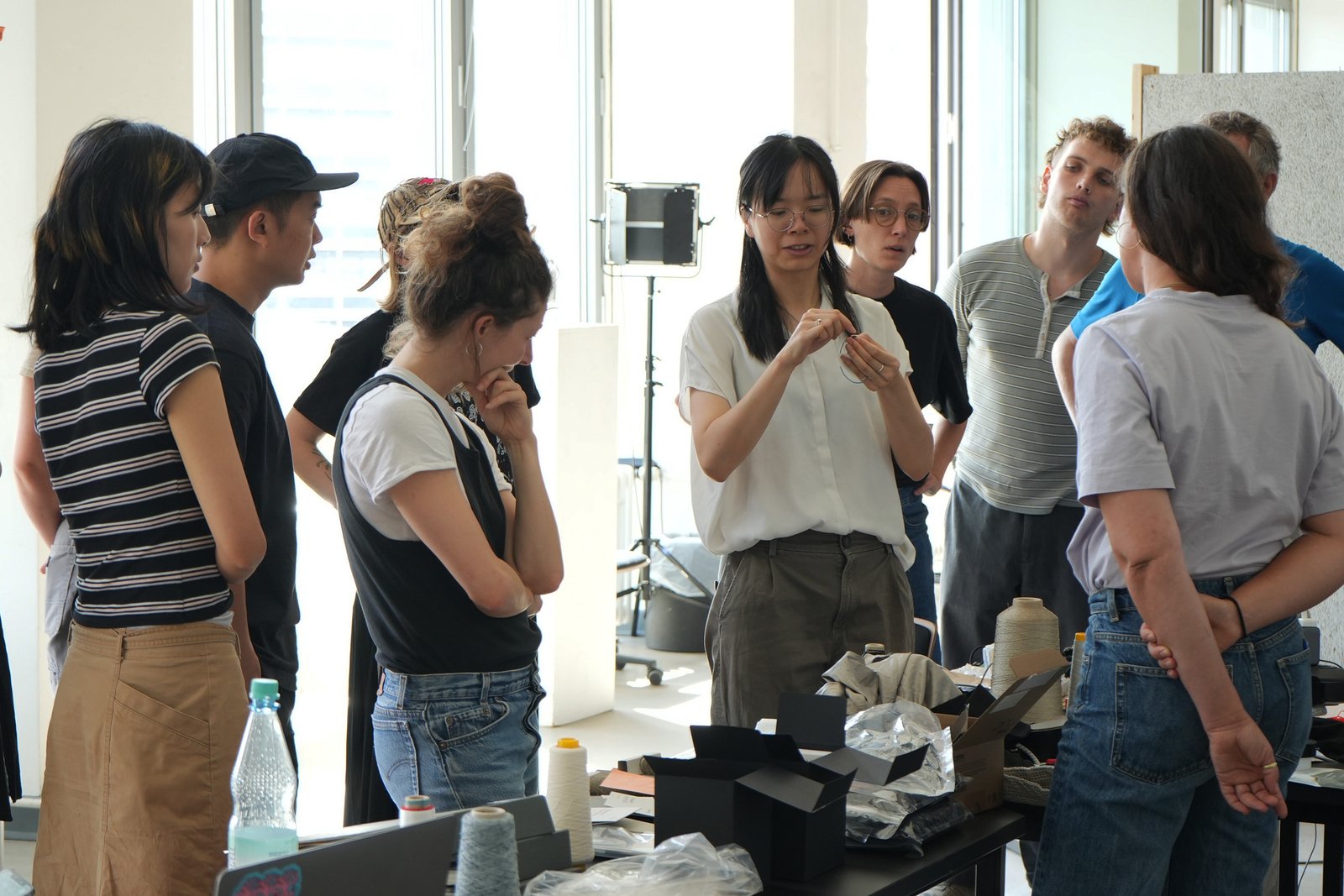
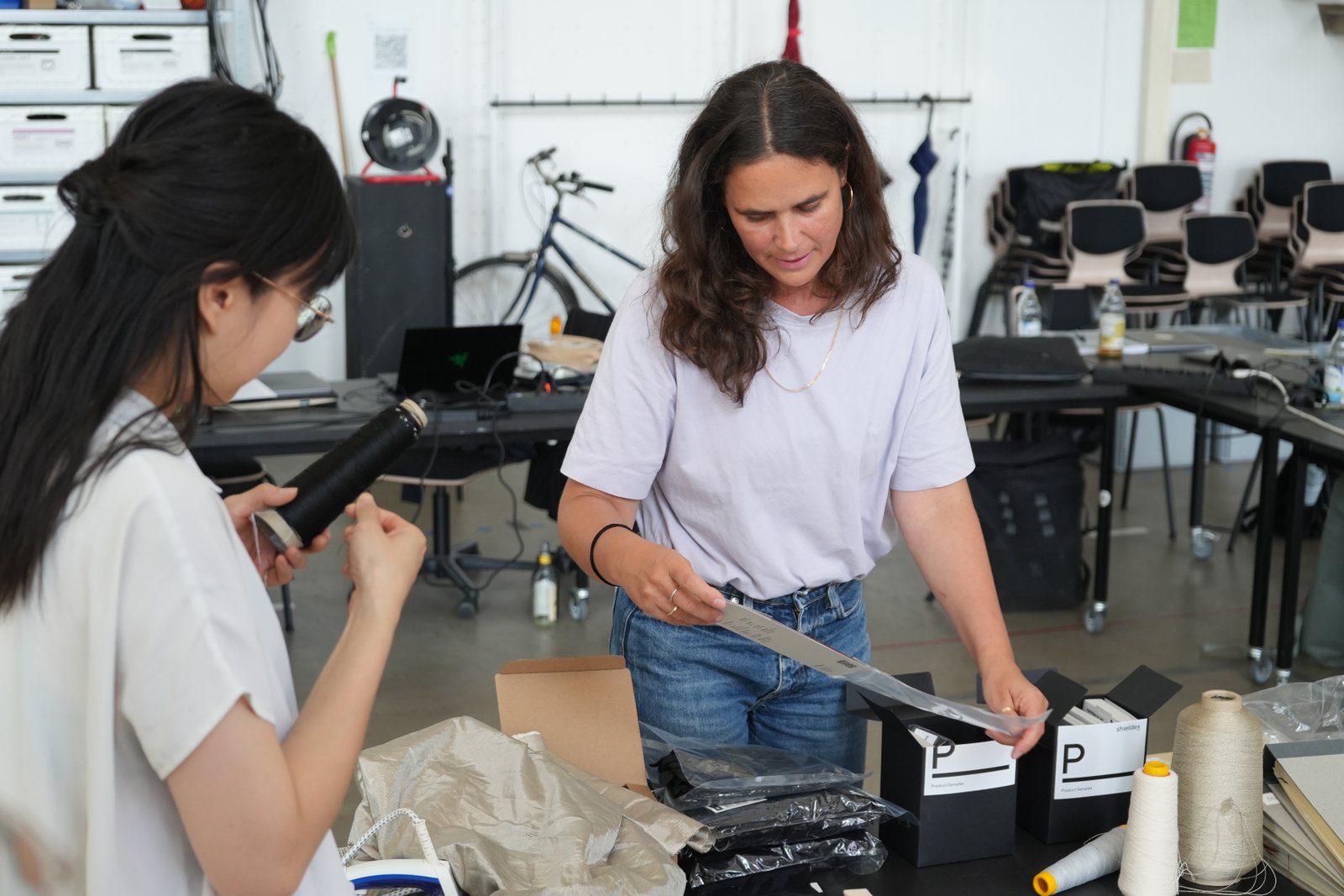
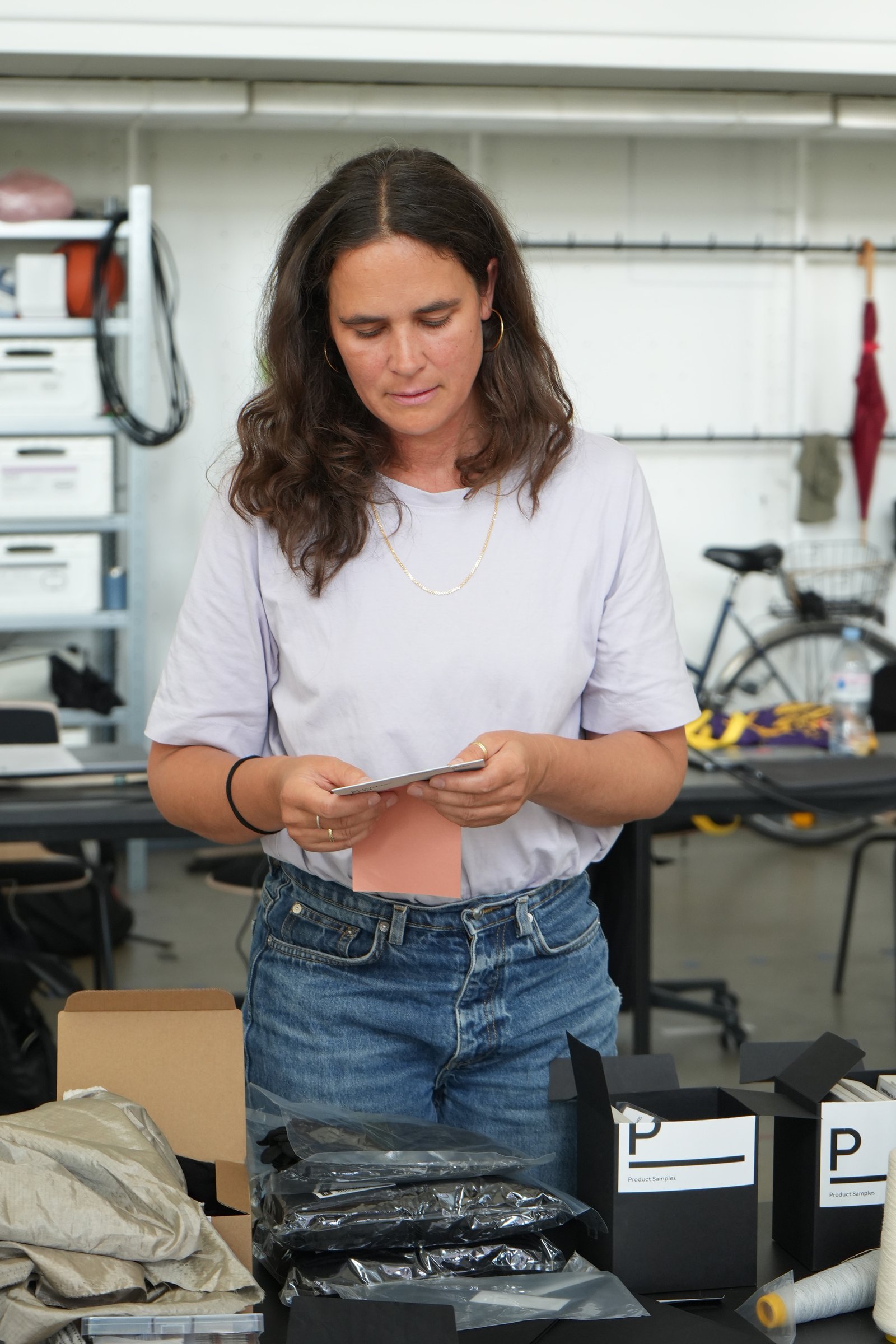
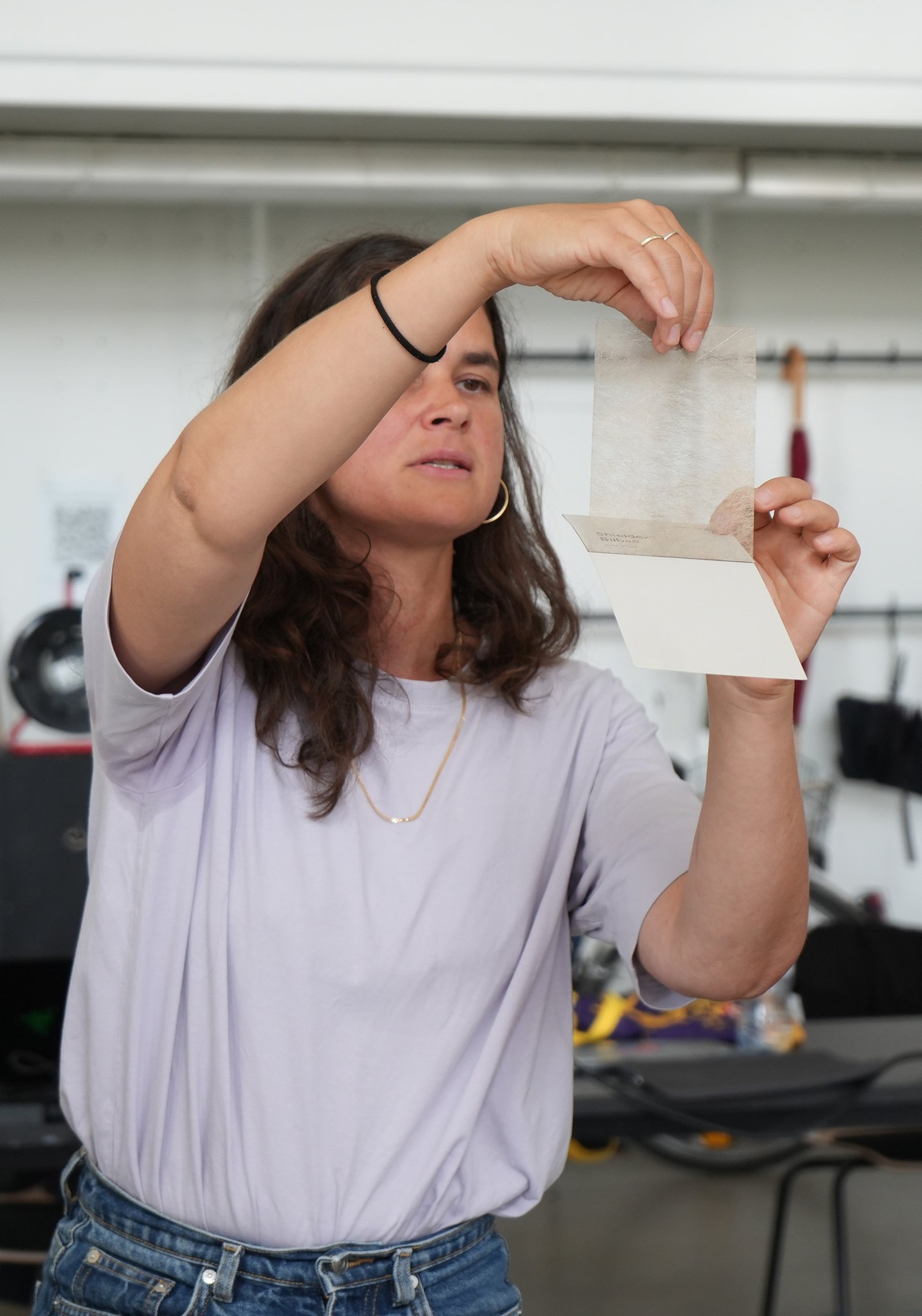
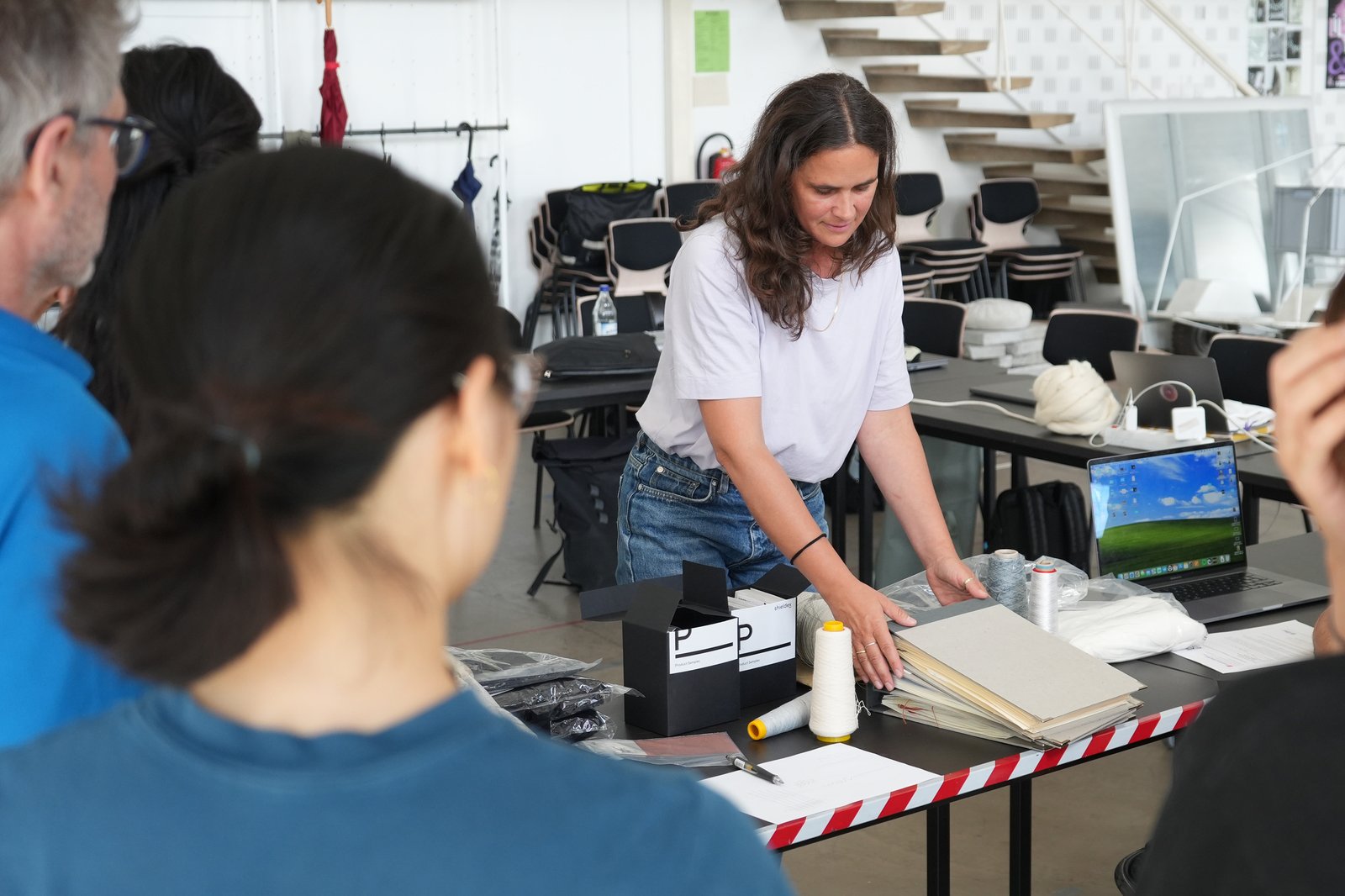
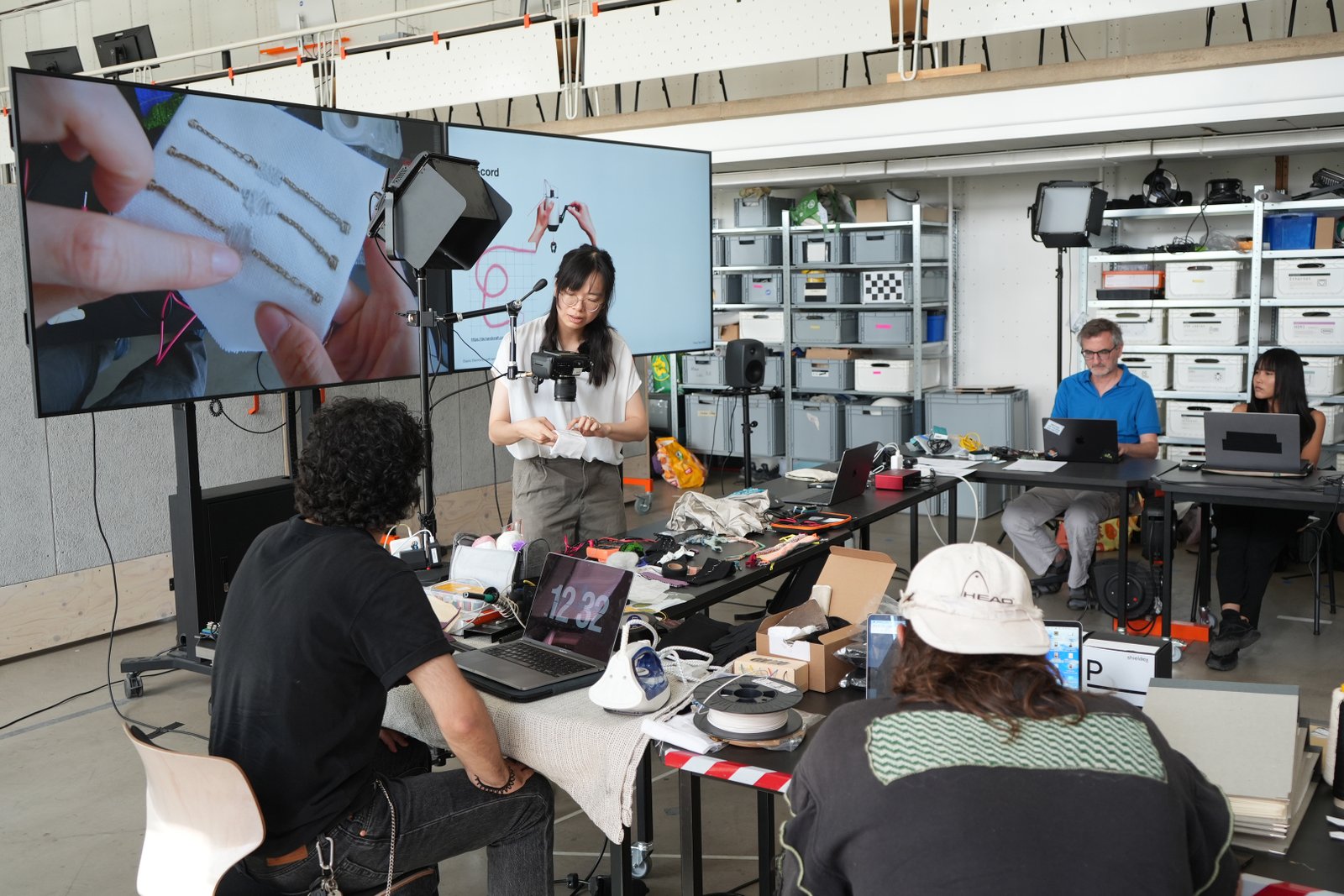
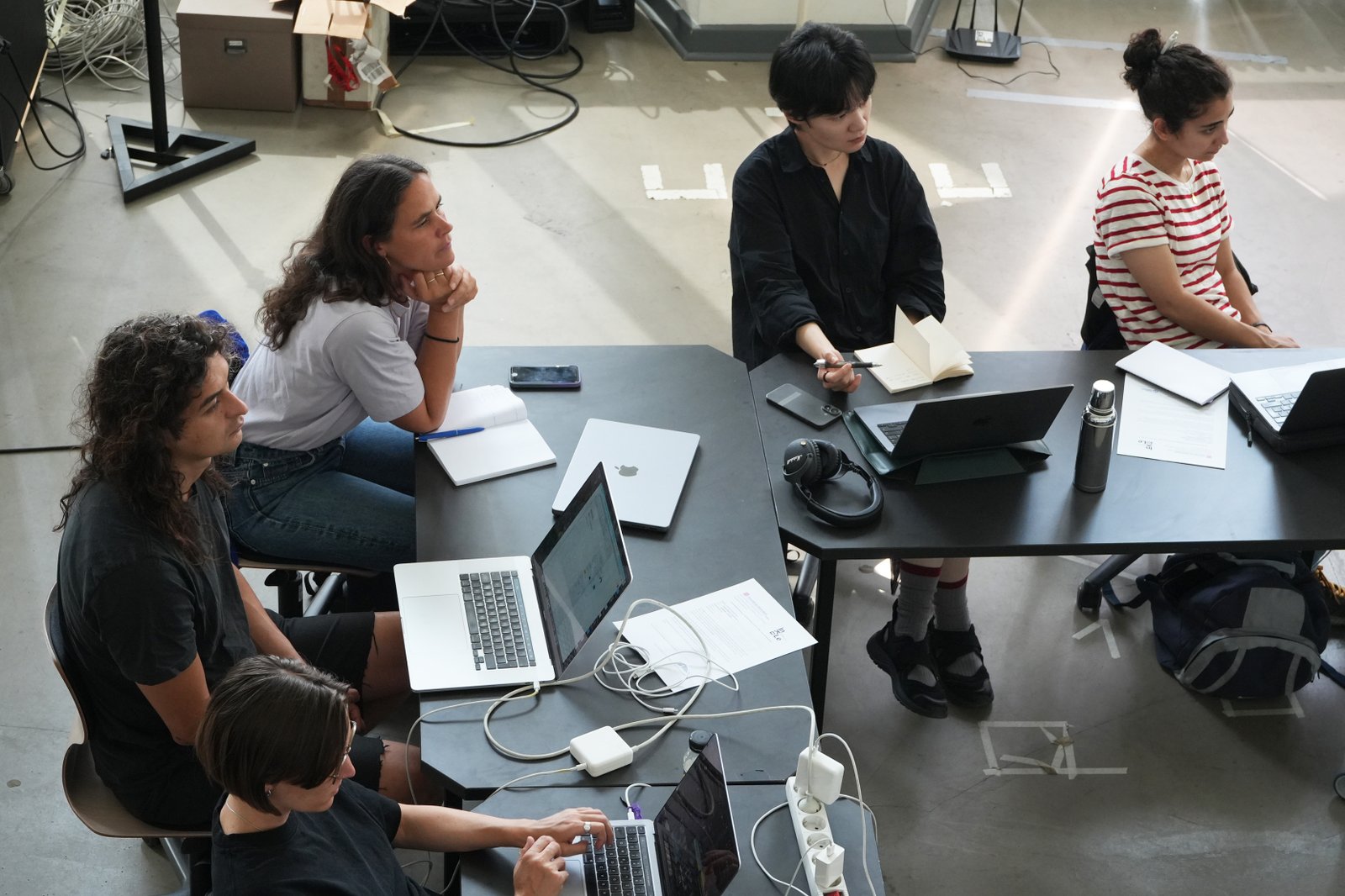
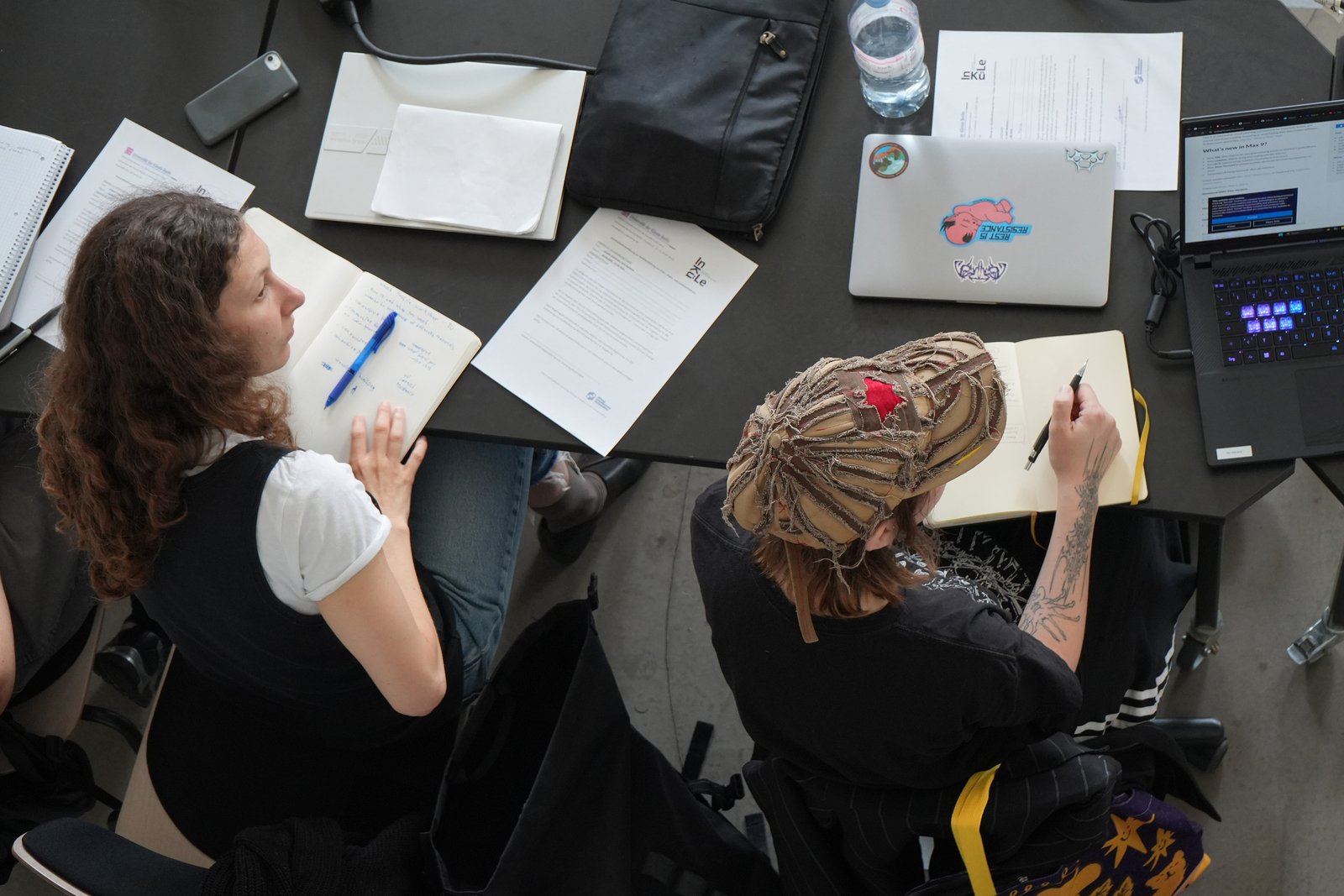
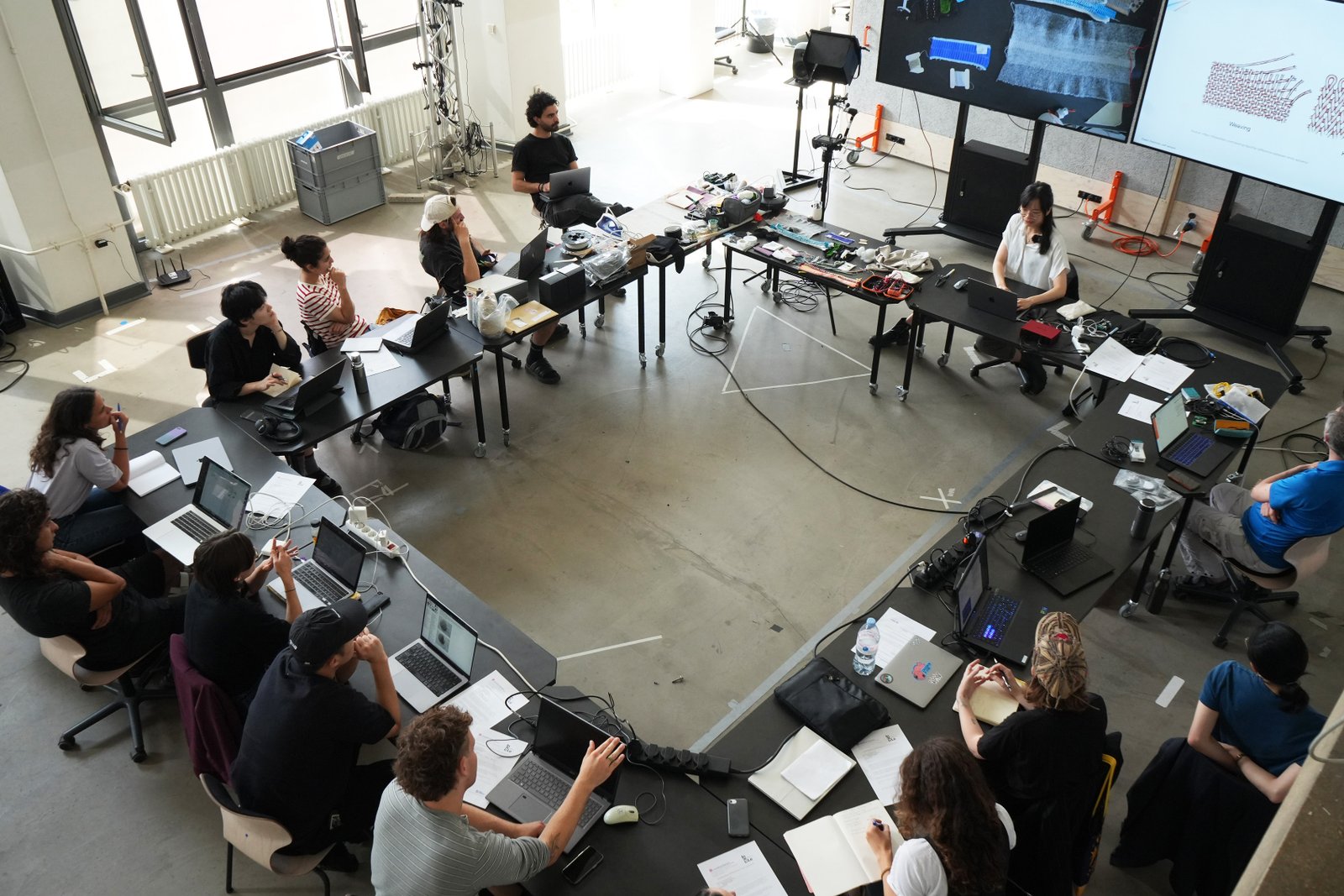
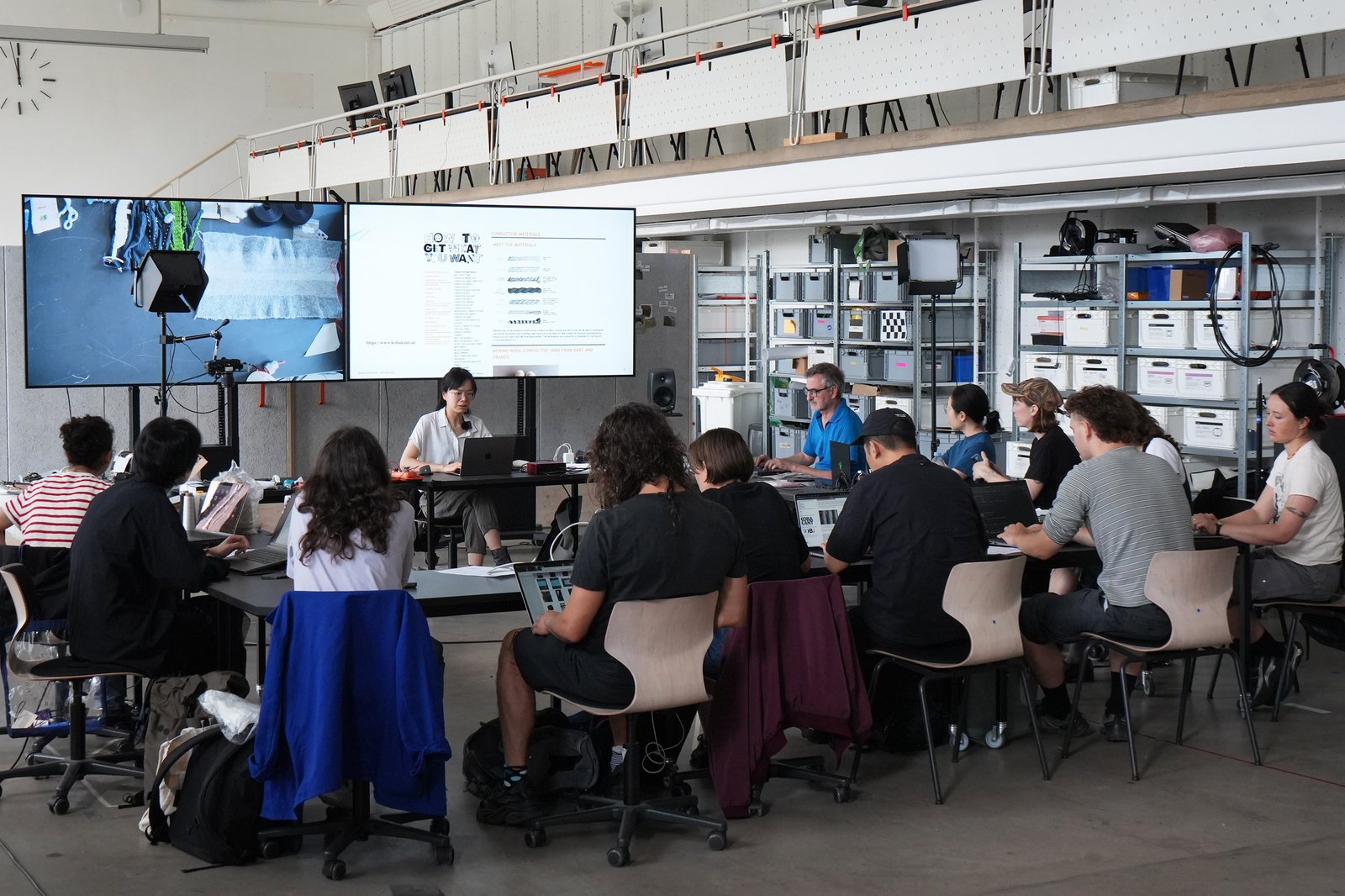
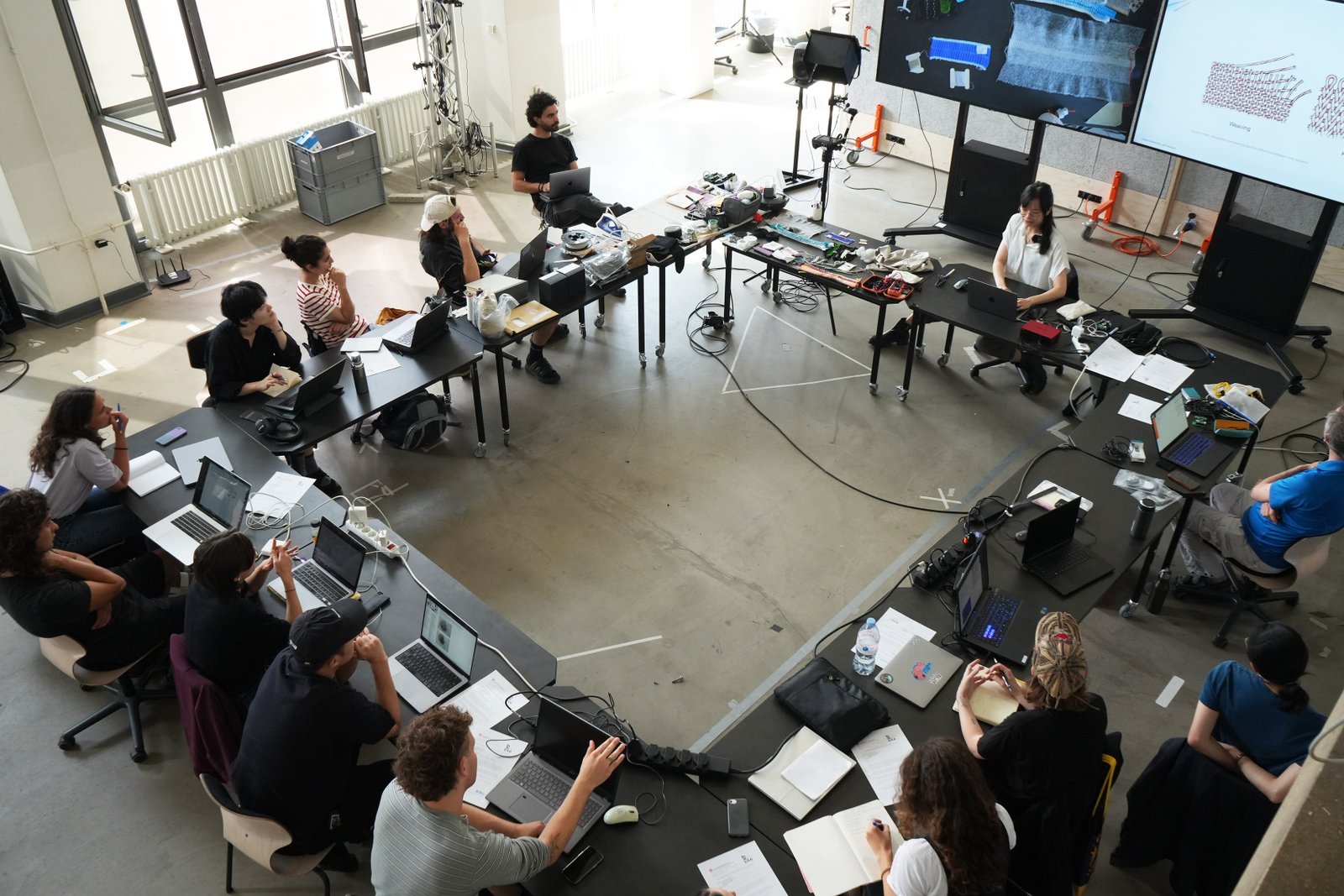
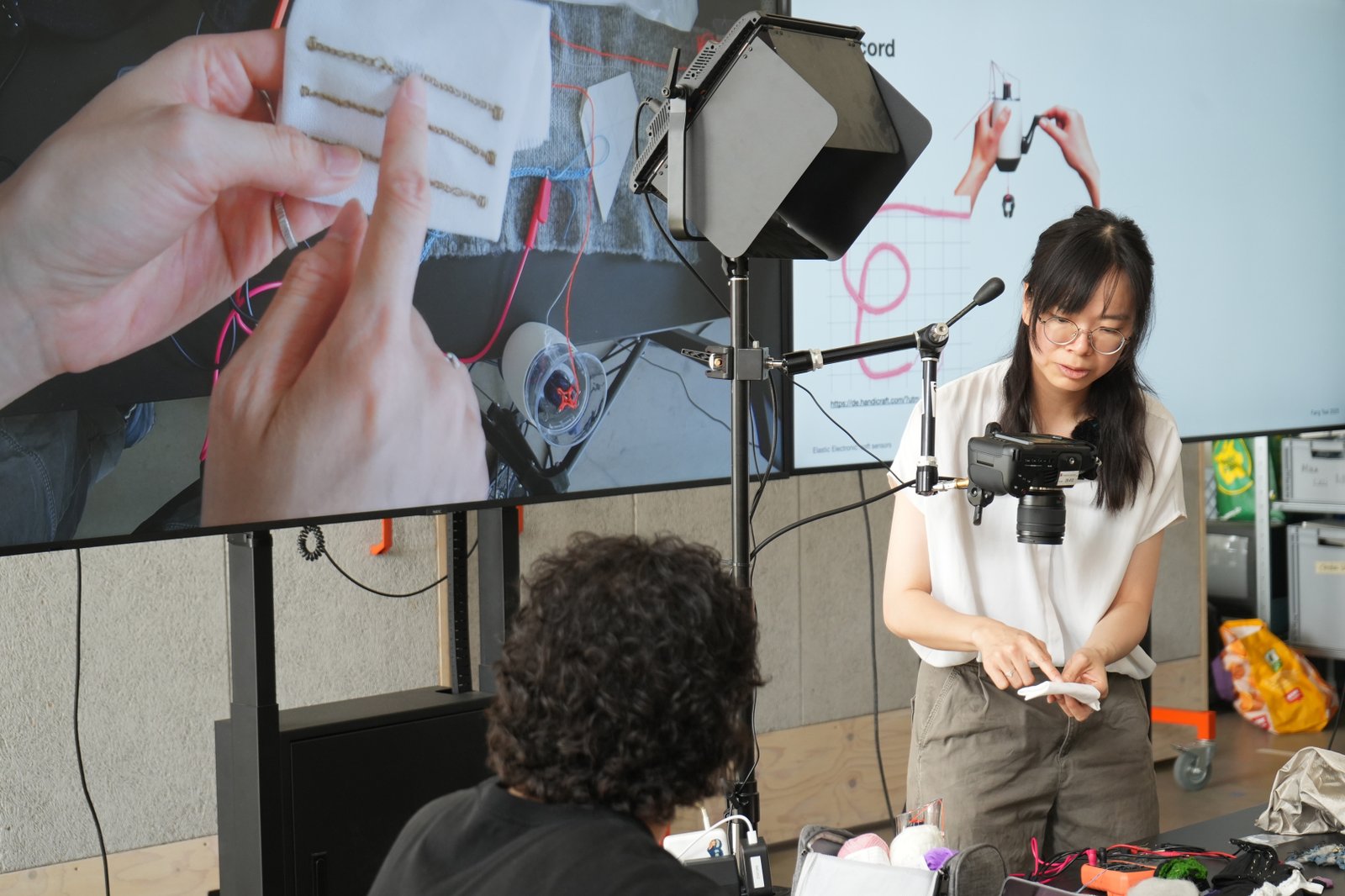
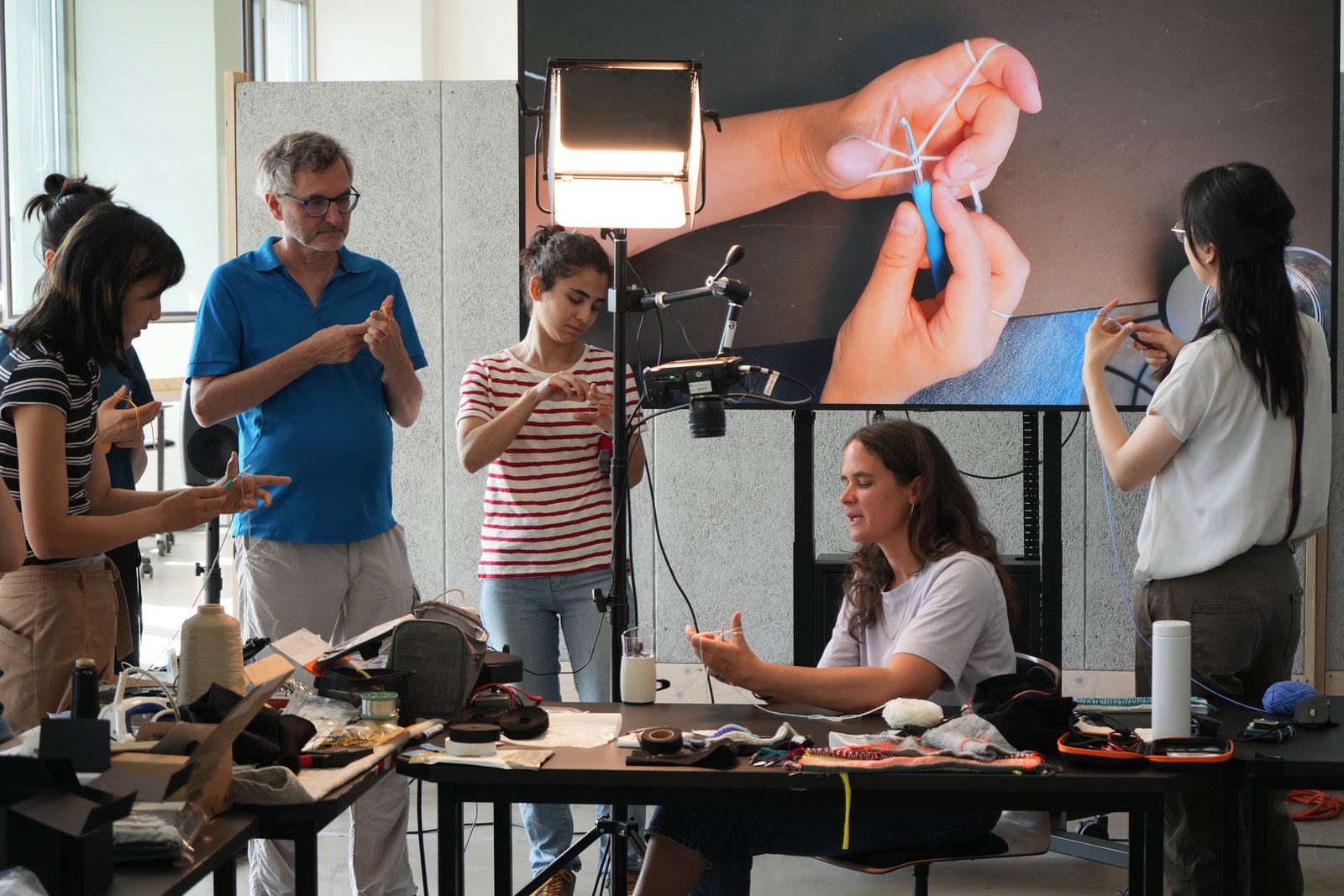
The workshop Elastic Electronic: Soft Sensors, hosted by Fang Tsai at the Design & Computation Studio of the Technical University of Berlin for student from Berlin University of the Arts, offered a hands-on exploration of the intersections between textiles, electronics, and sound. Designed as a transdisciplinary experience, it brought together students from visual communication, dance, product design, sound studies, and fine arts, encouraging collaboration across creative and technical fields.
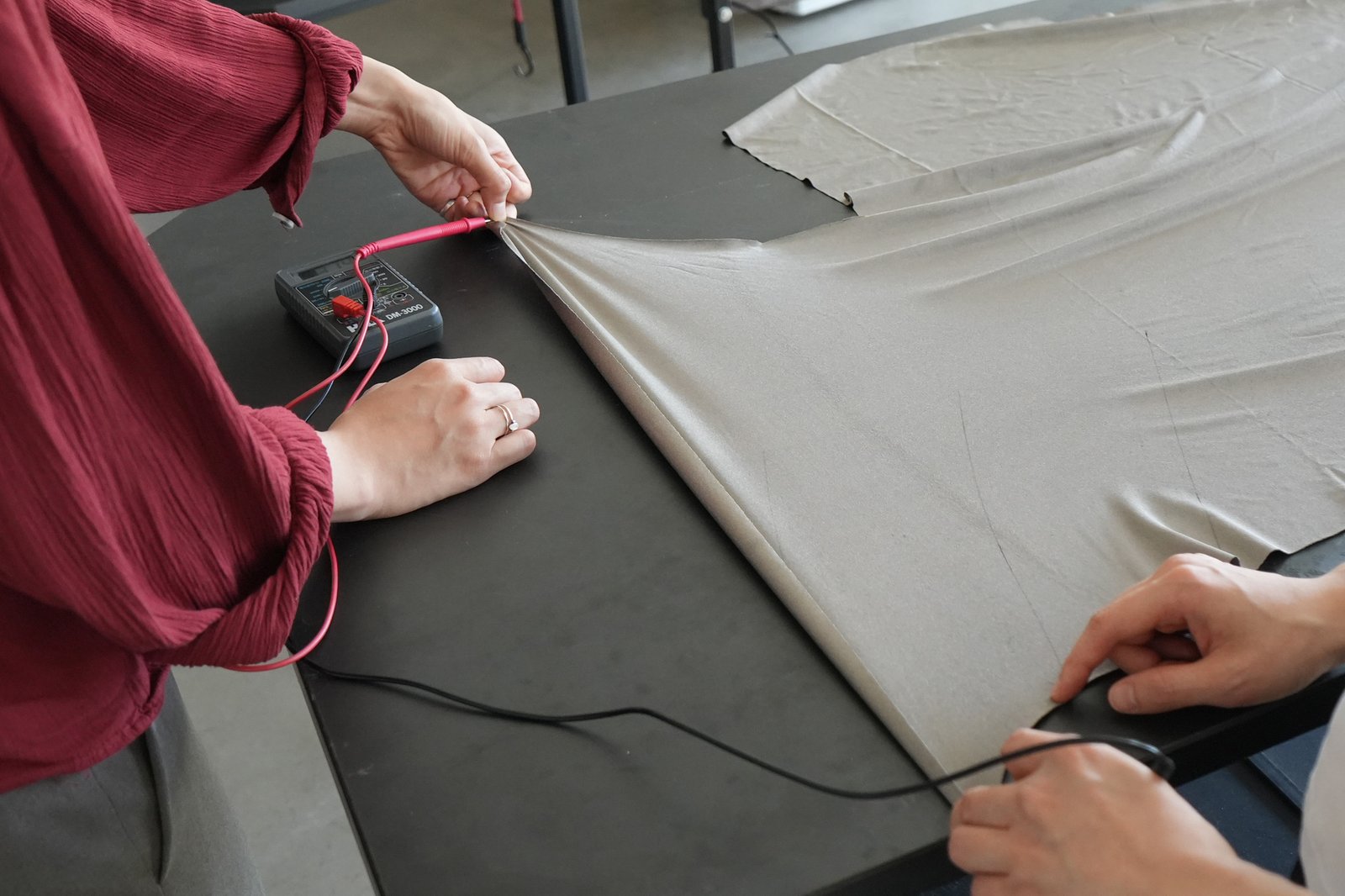
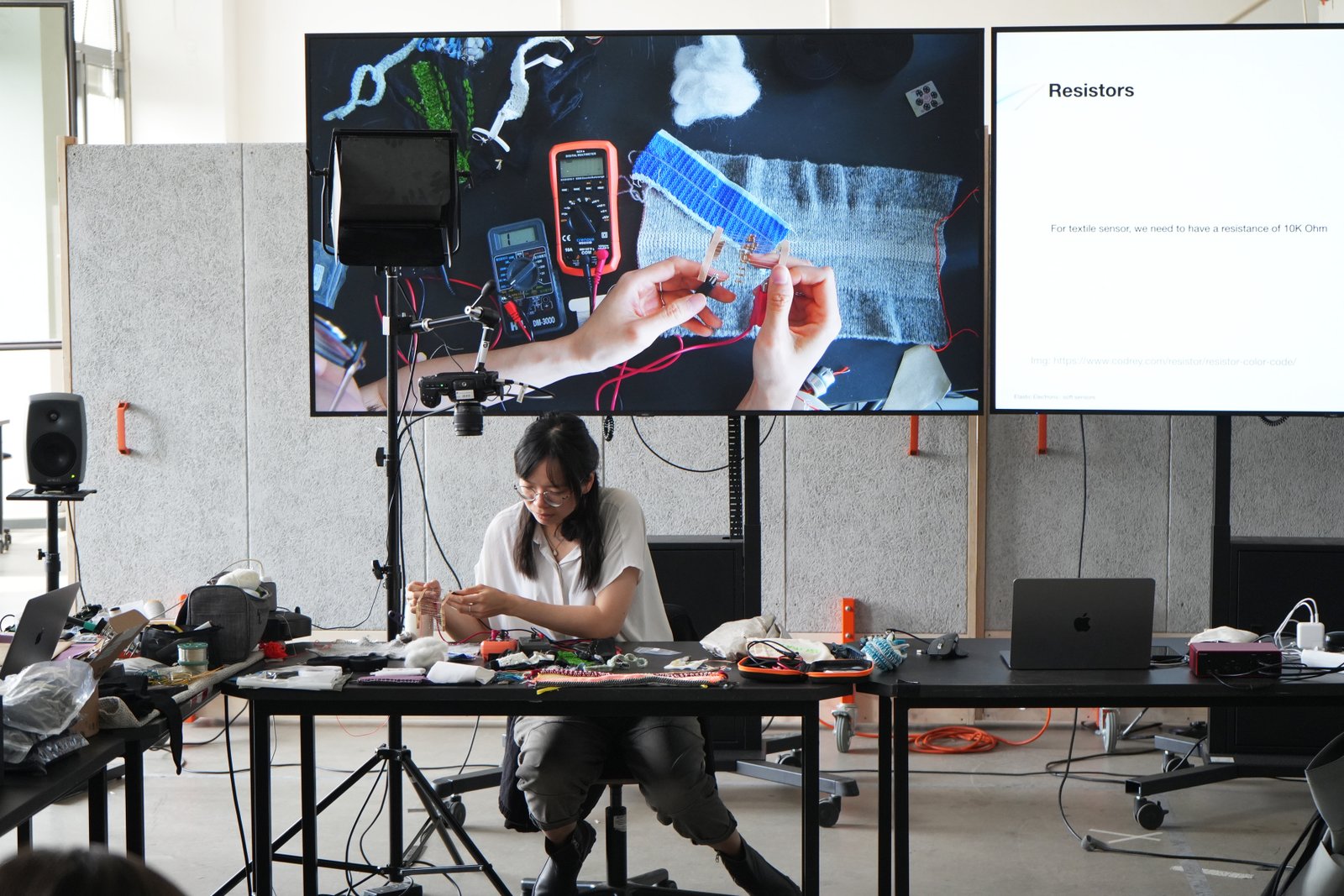
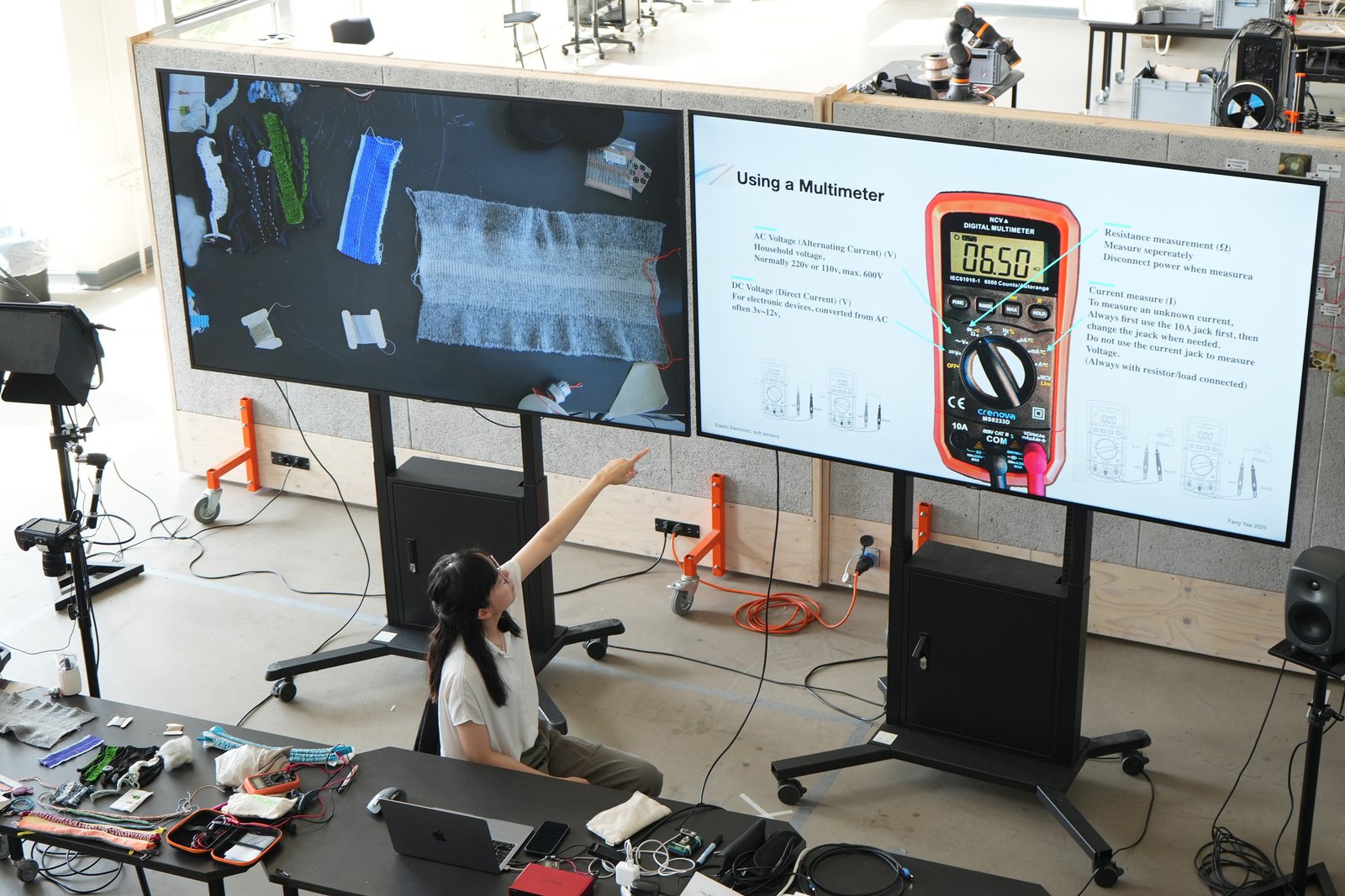
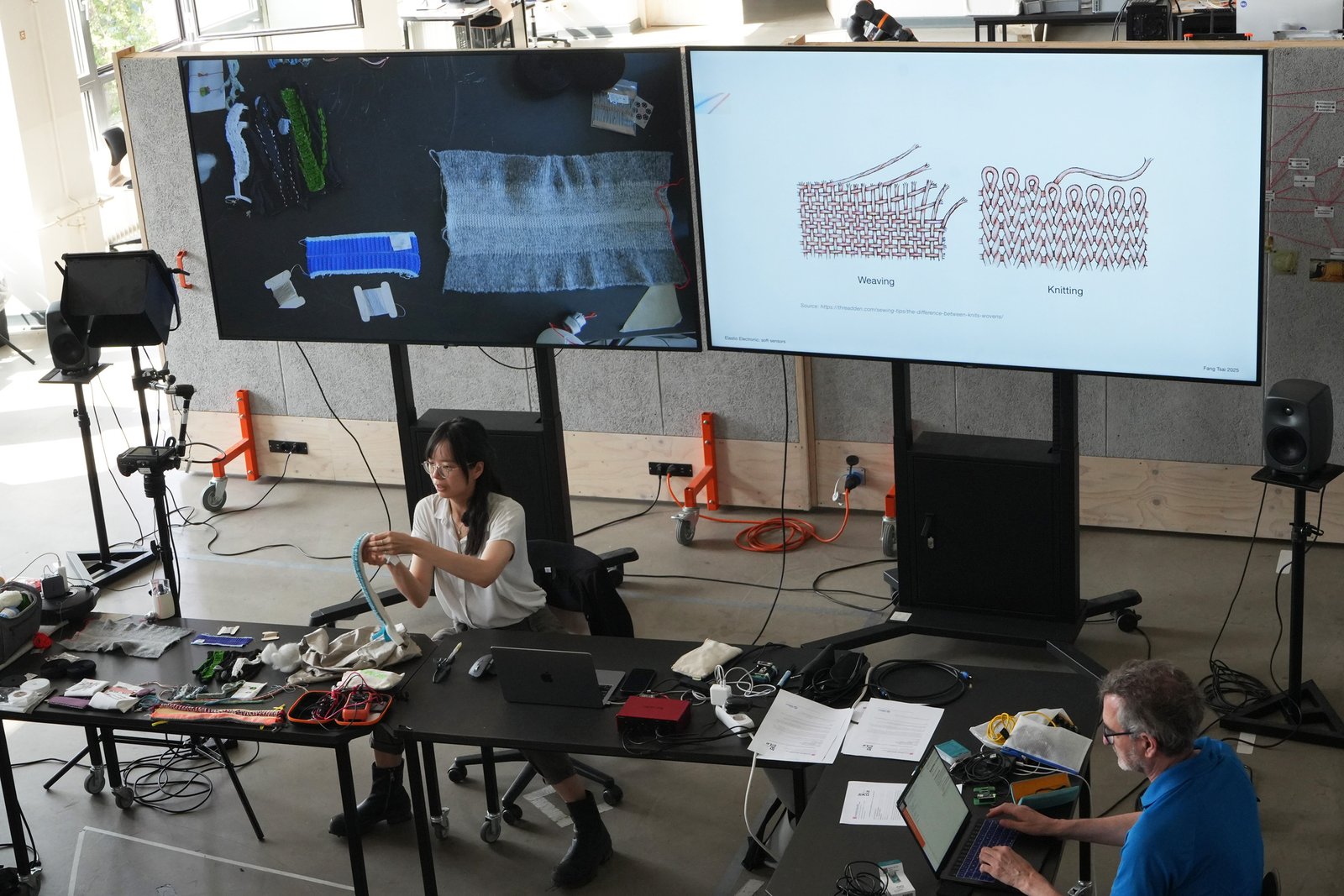
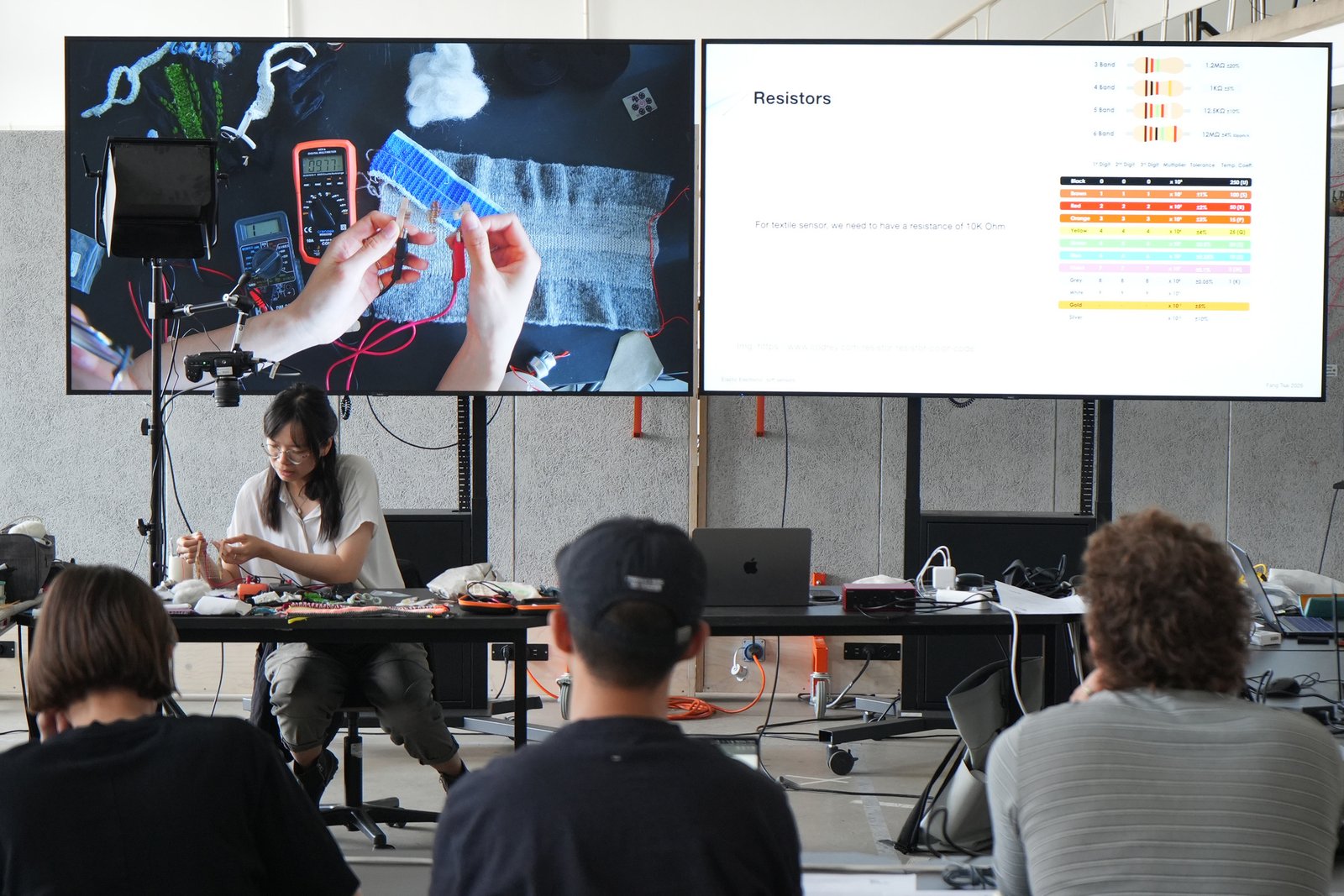
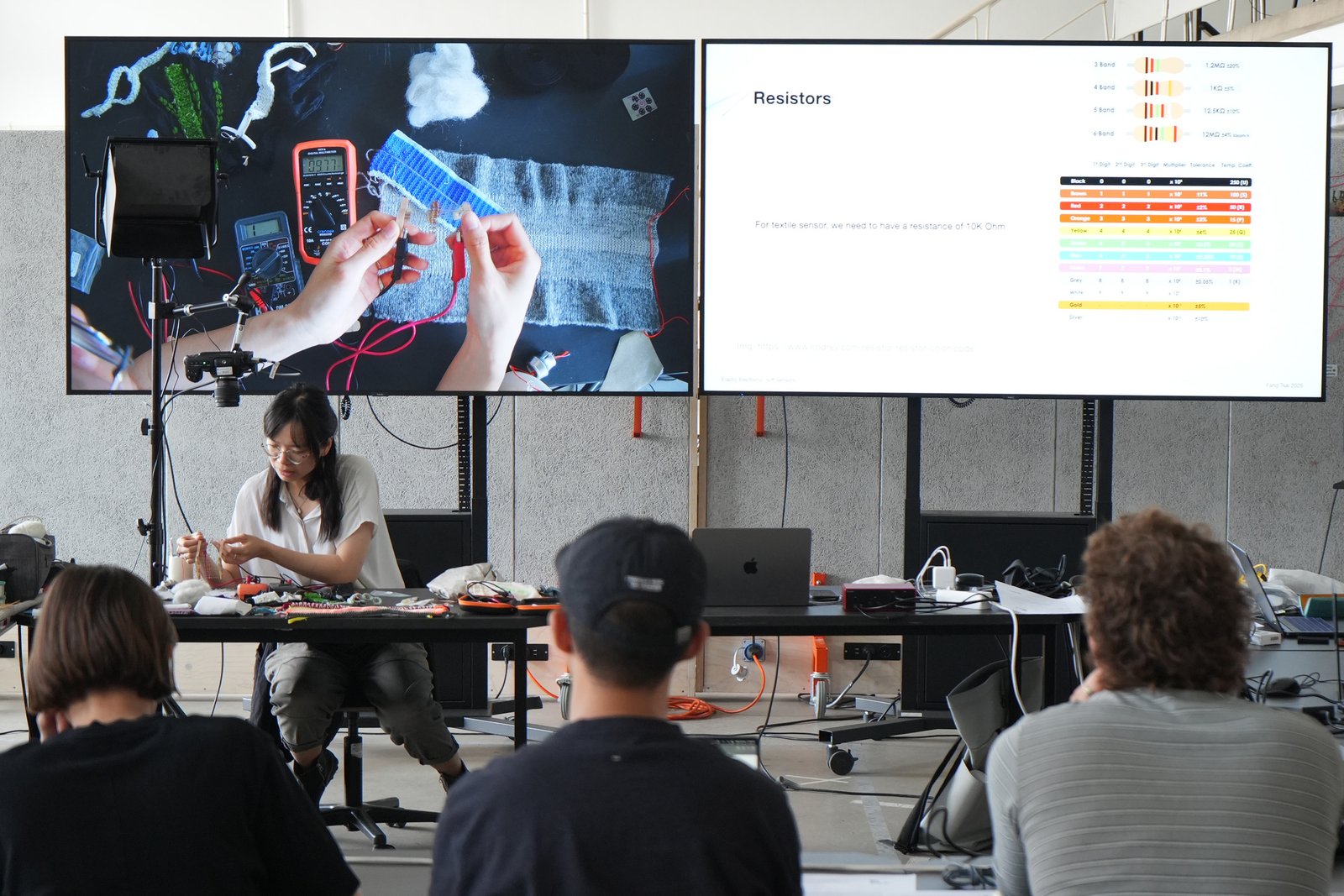
The workshop focused on creating interactive textile sensors that translate touch, pressure, and movement into electronic signals for sound and performance applications.The first day introduced participants to basic principles of electricity, including voltage, resistance, and conductivity.
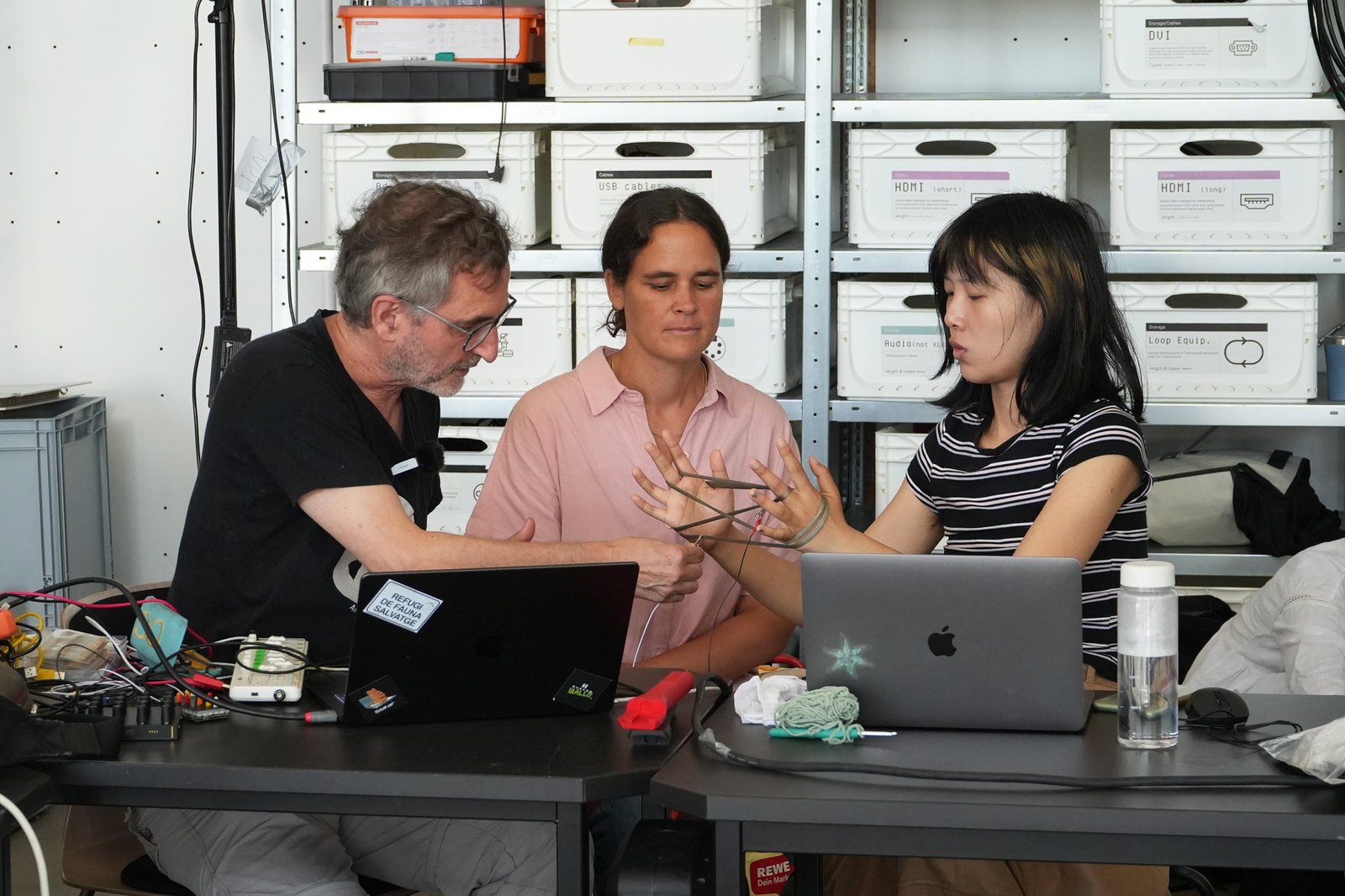
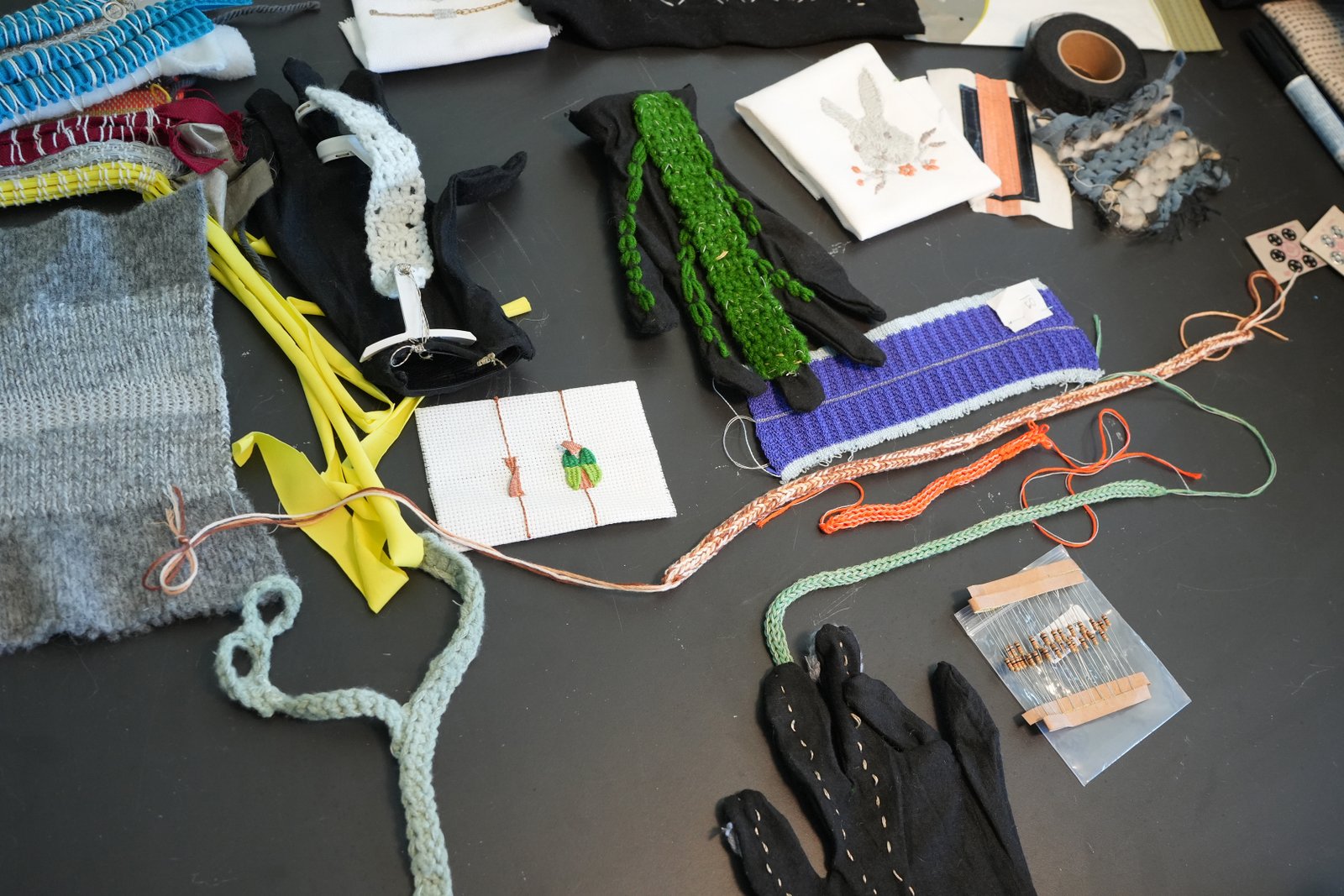
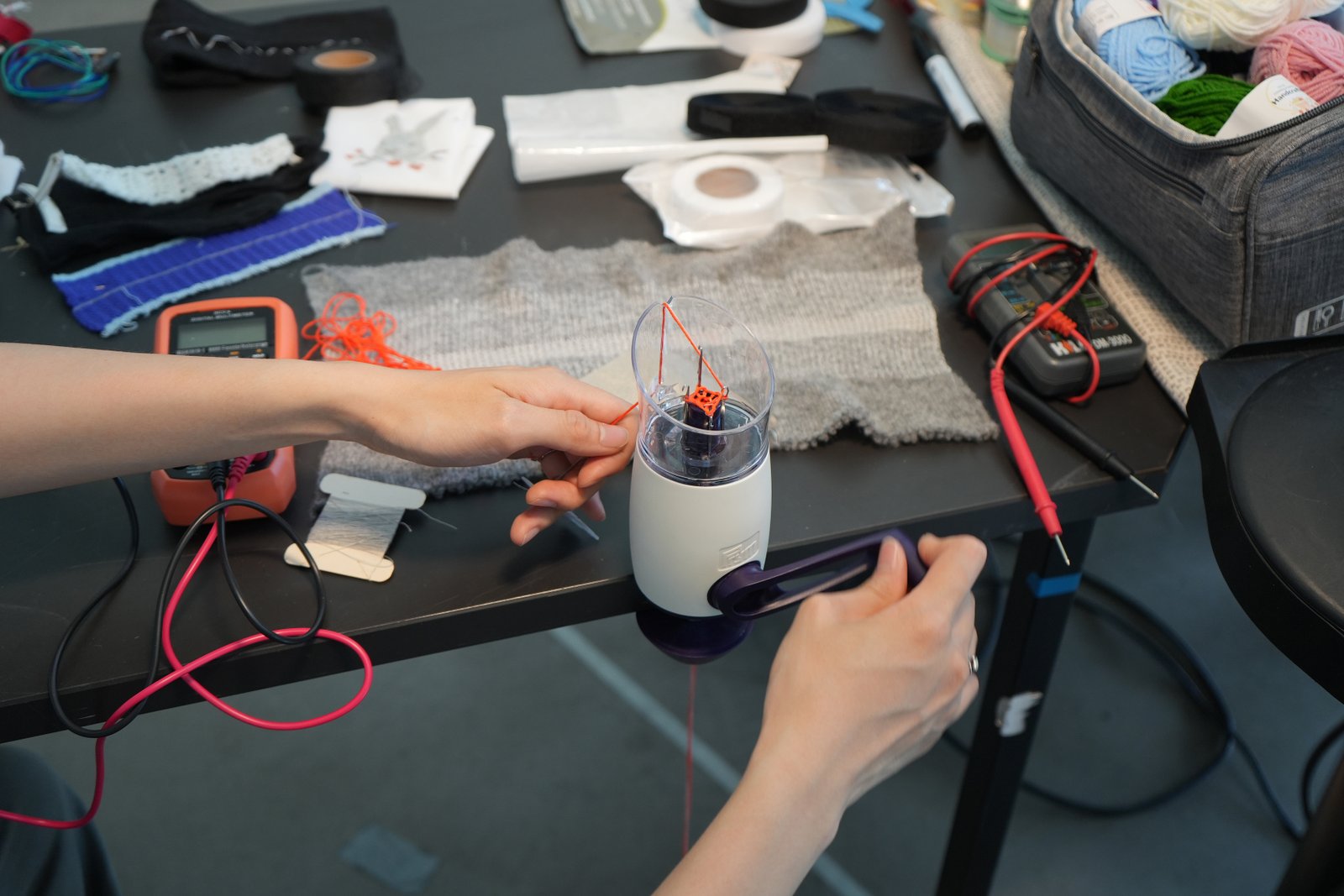
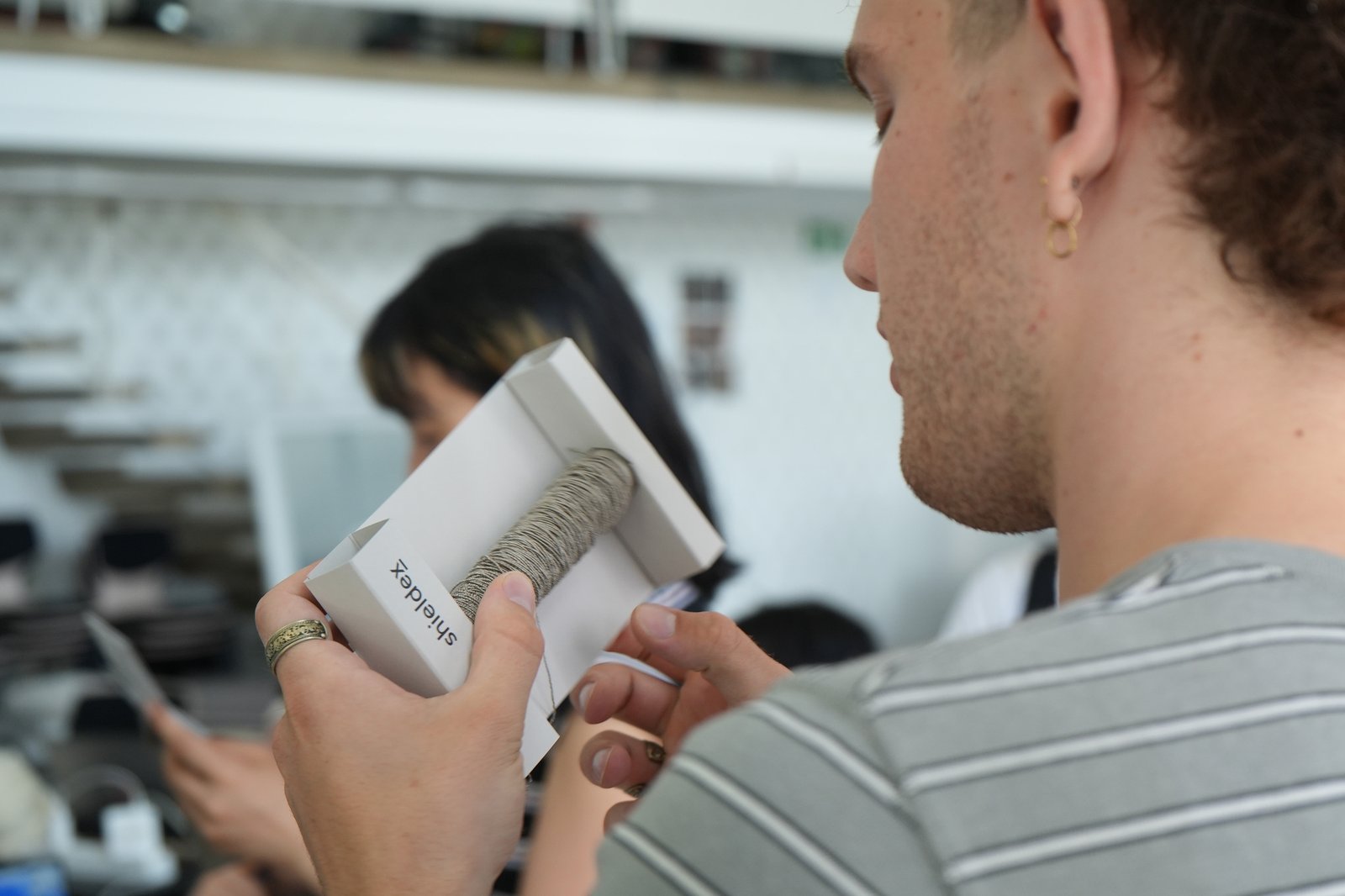
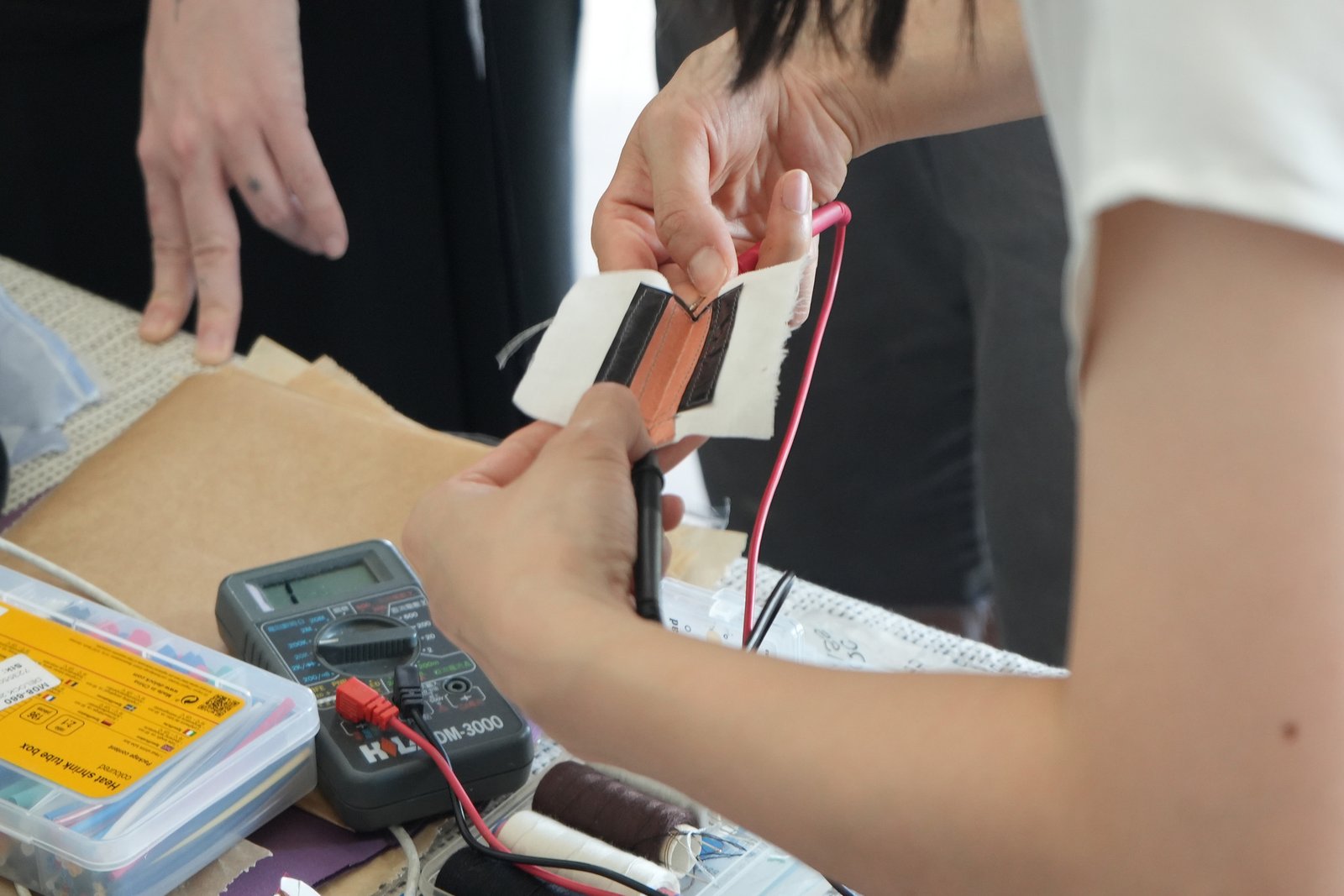
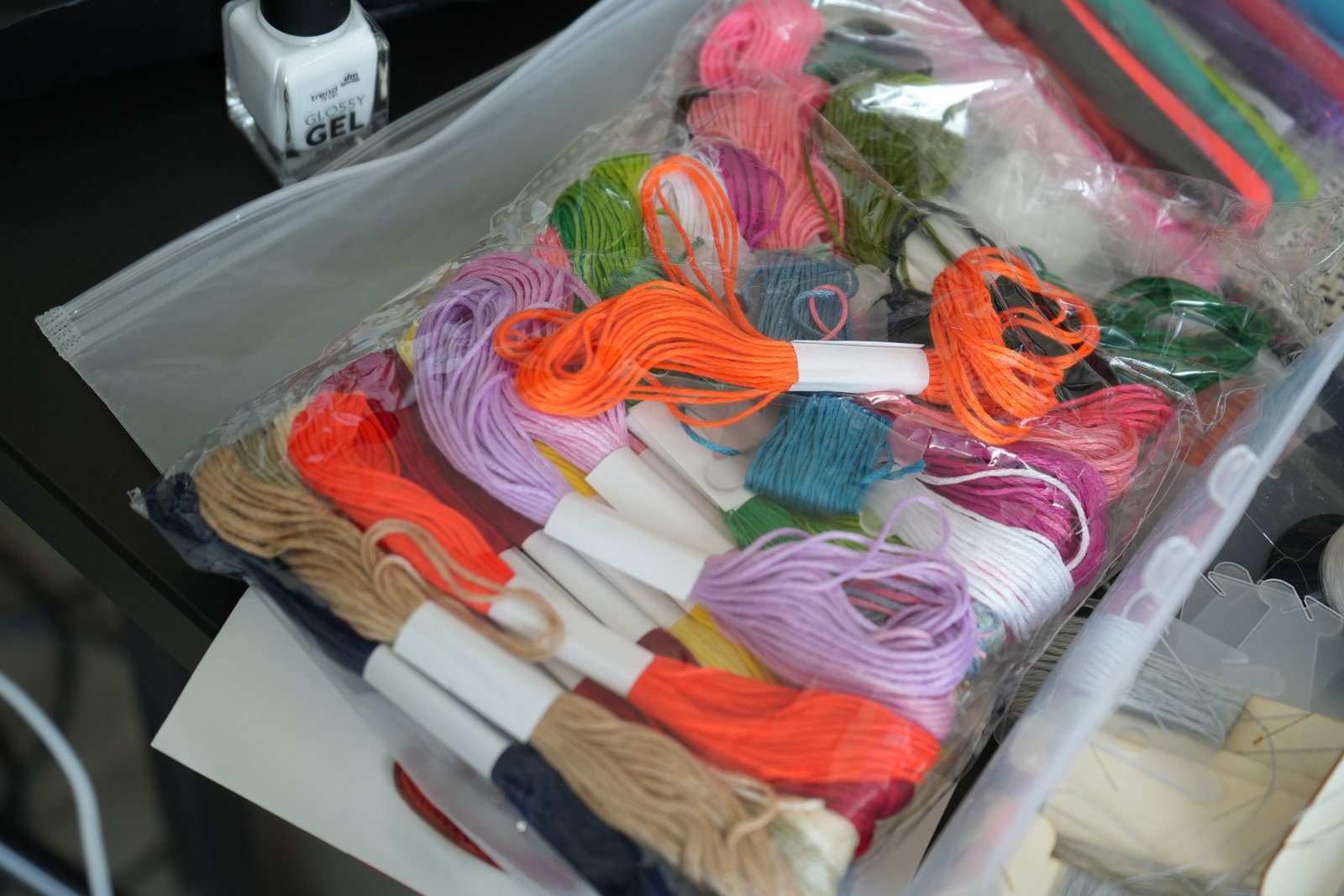
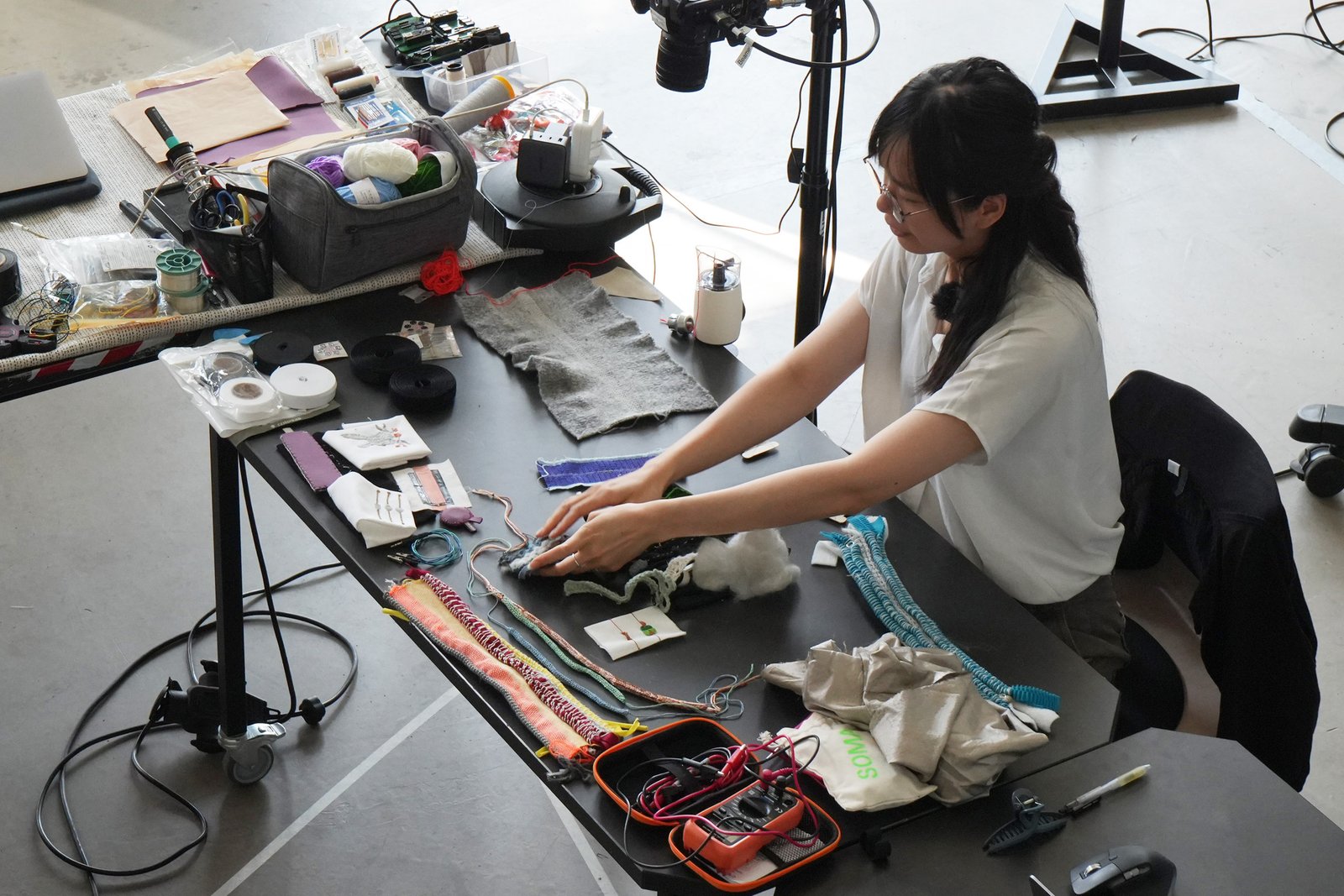
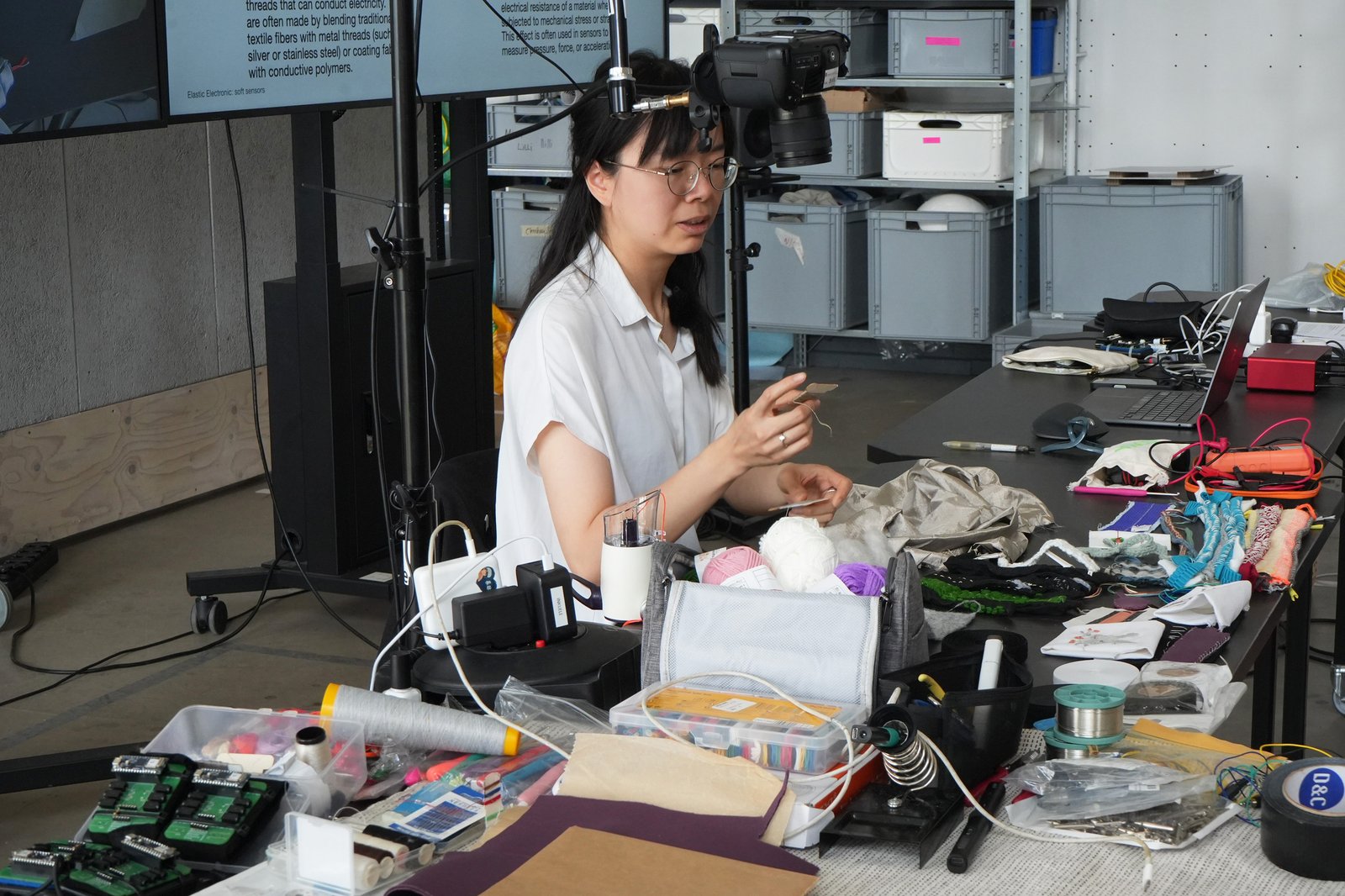
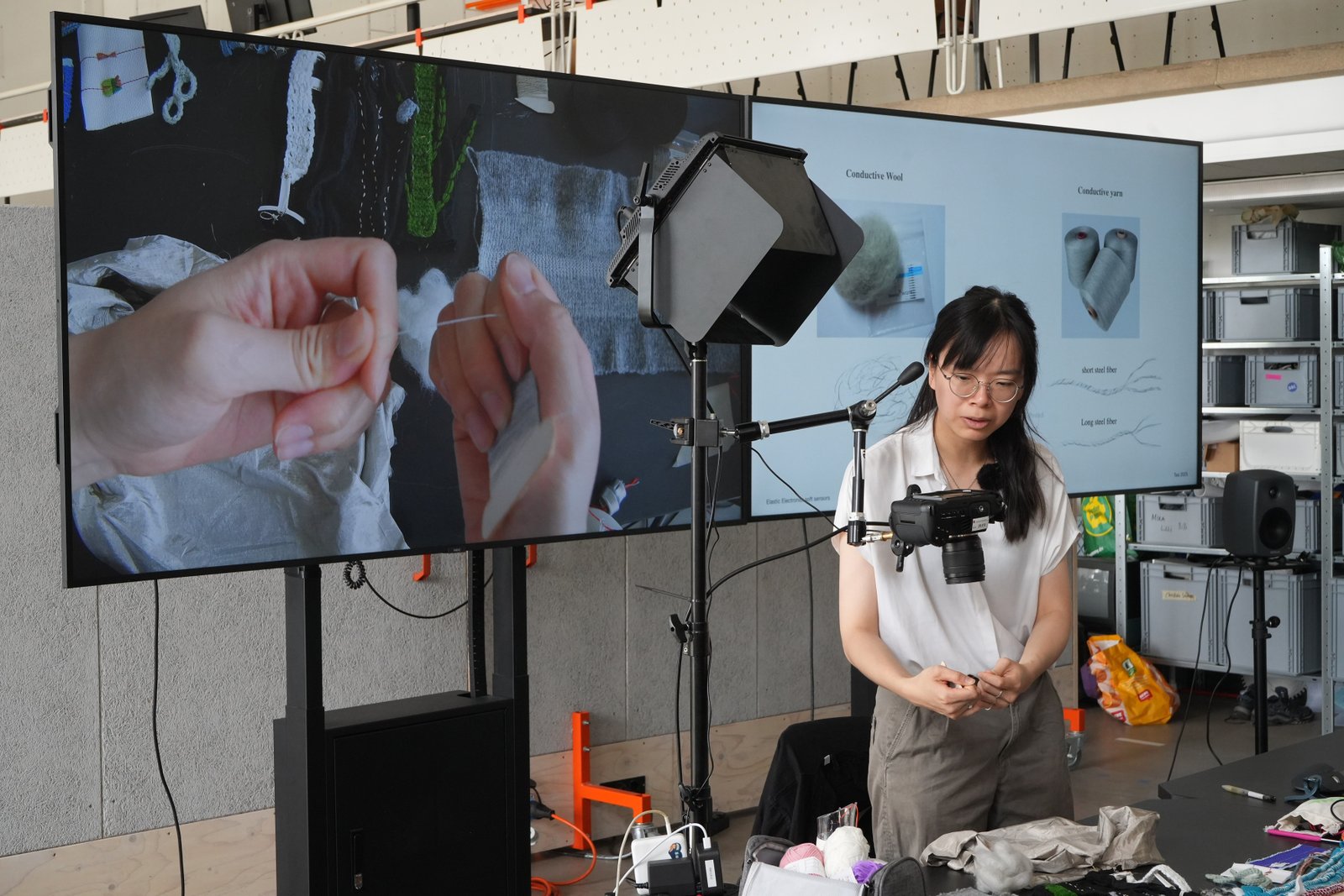
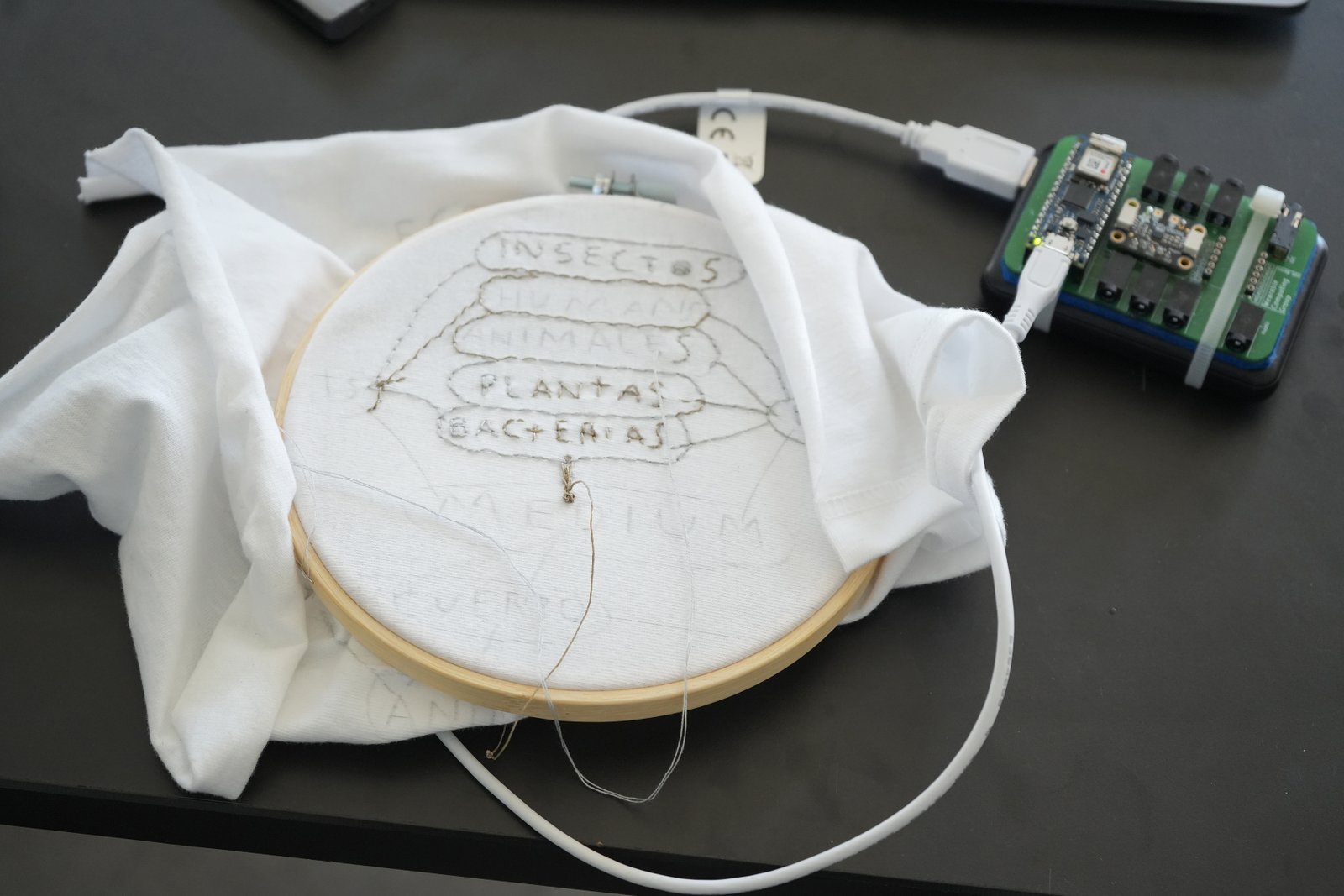
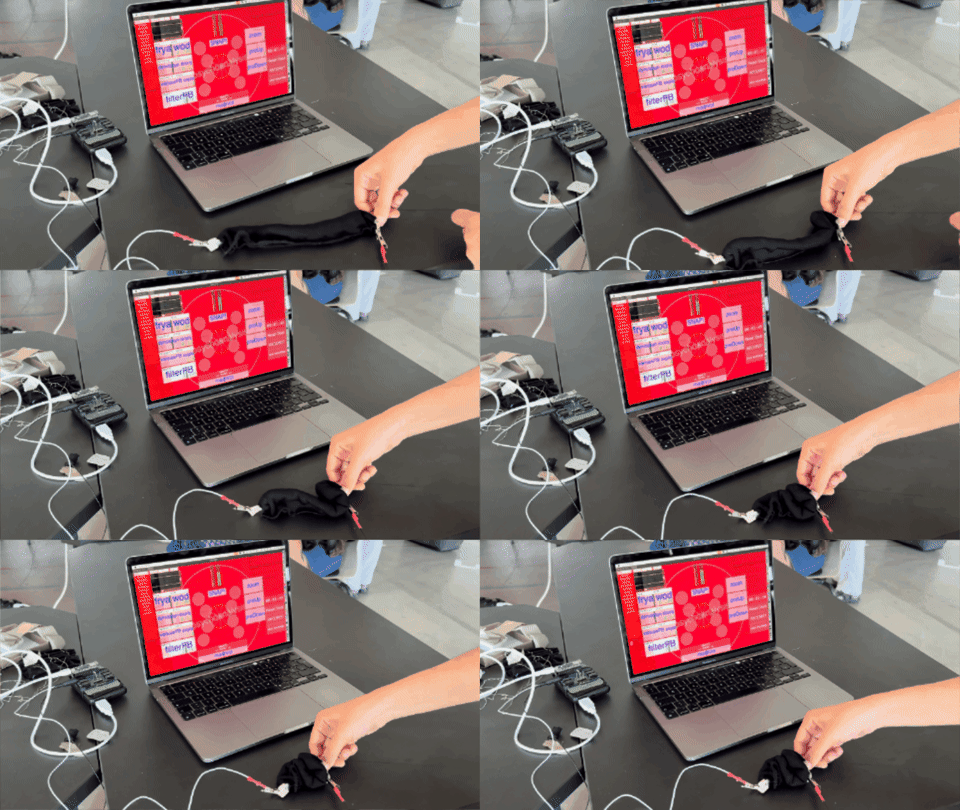
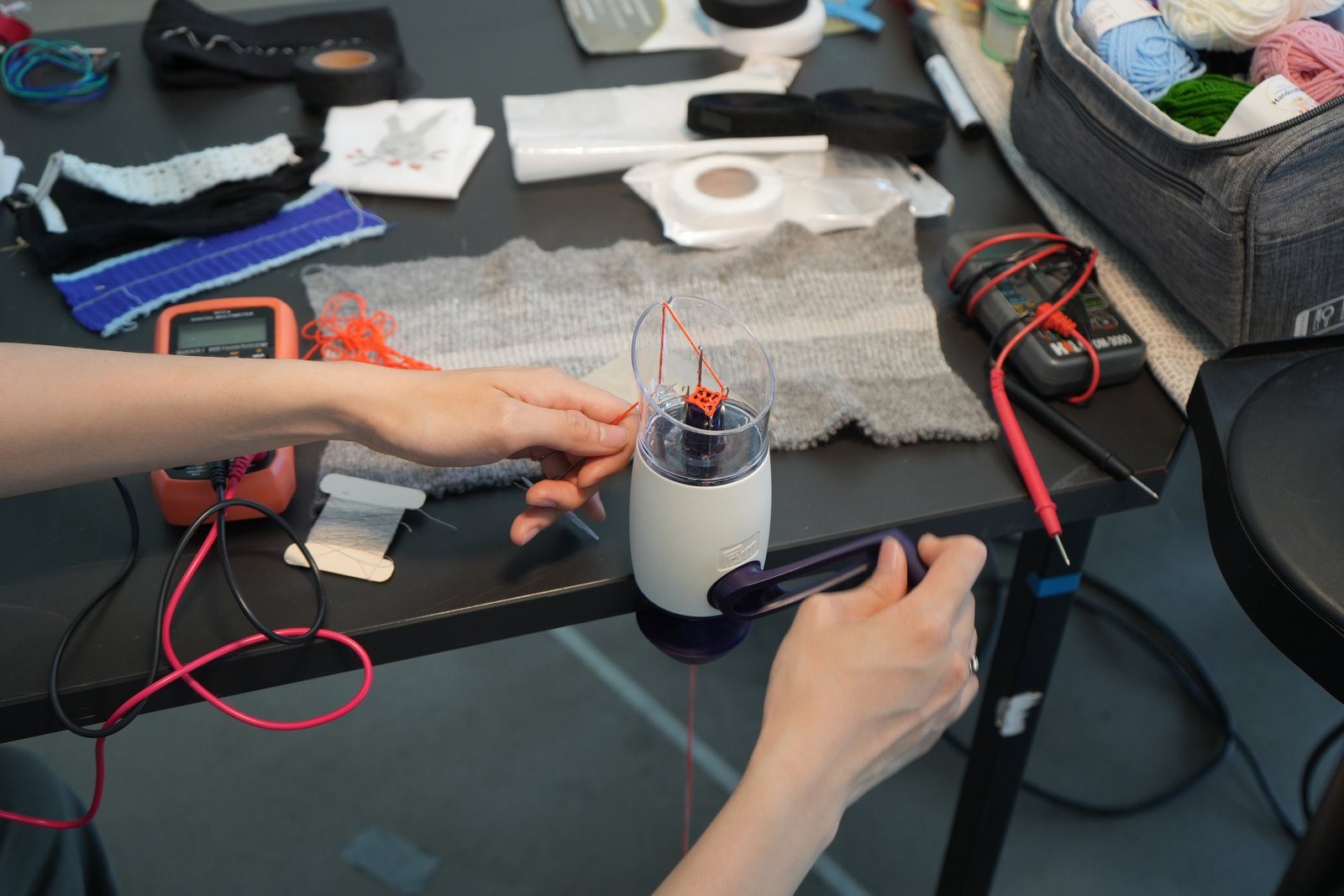
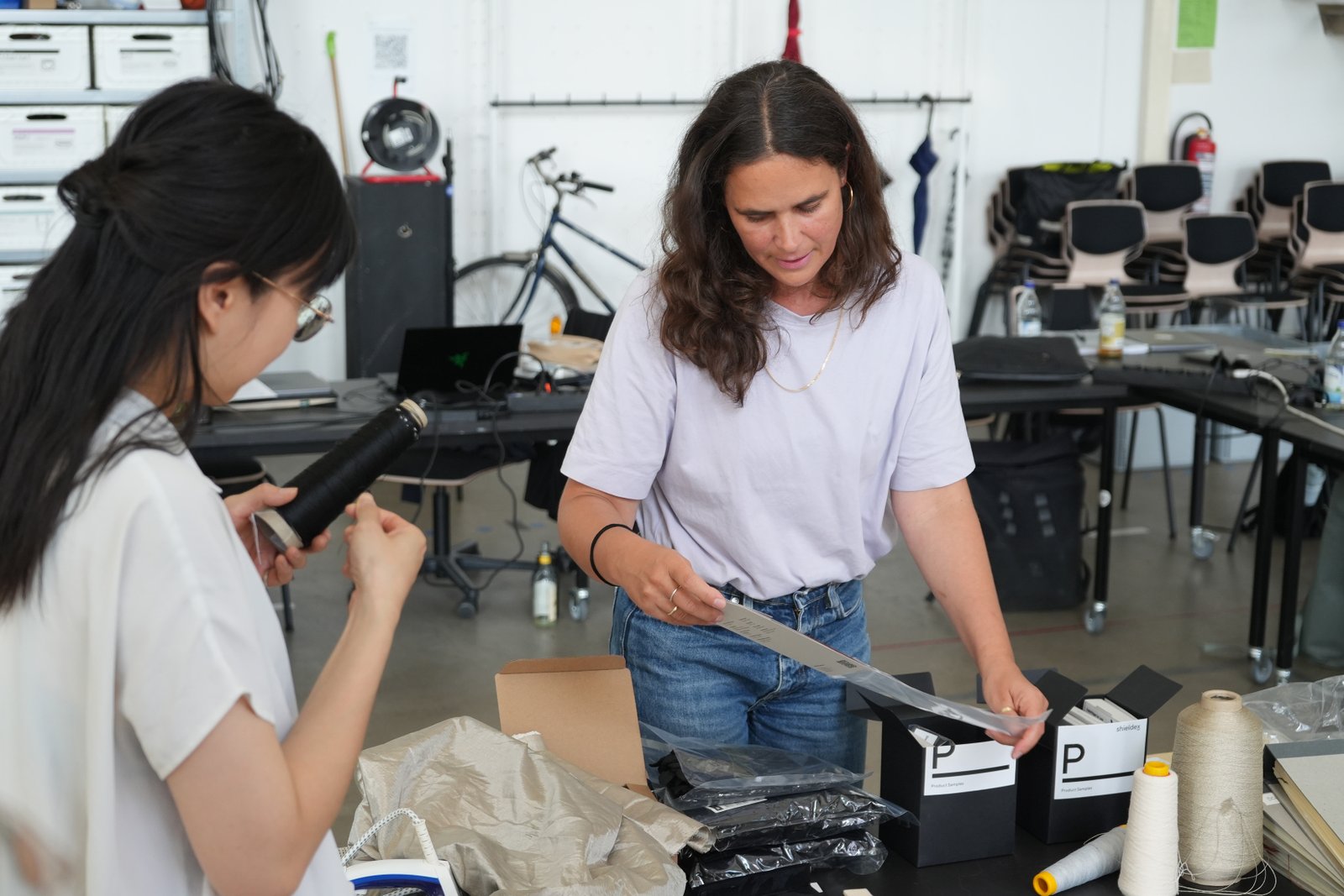
Participants then experimented with conductive threads, yarns, and fabrics, learning how tactile interactions and stretching could alter the electrical resistance of textile materials. These changes were measured and visualized in real time, giving tangible insight into the relationship between physical gestures and electronic signals.
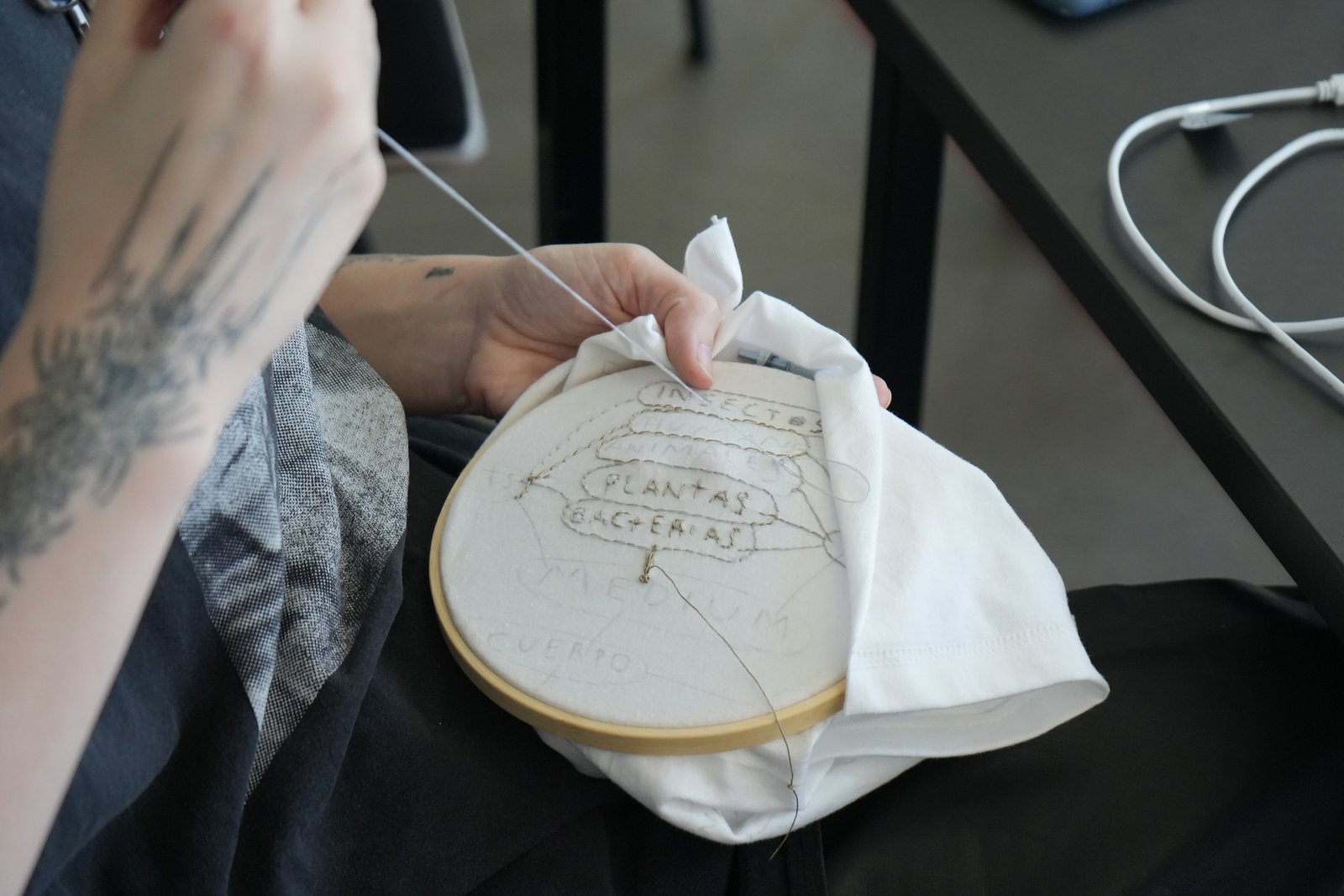
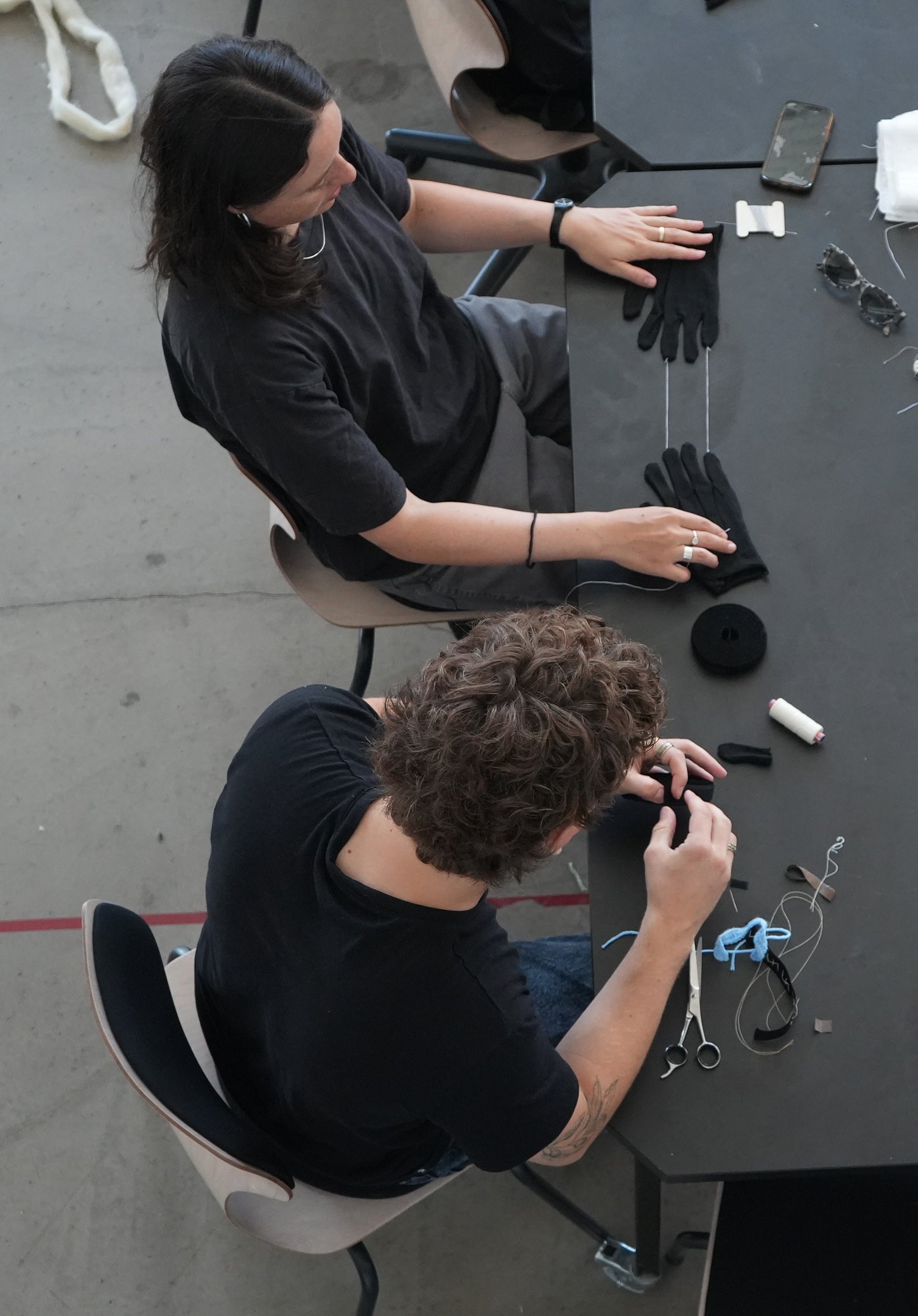
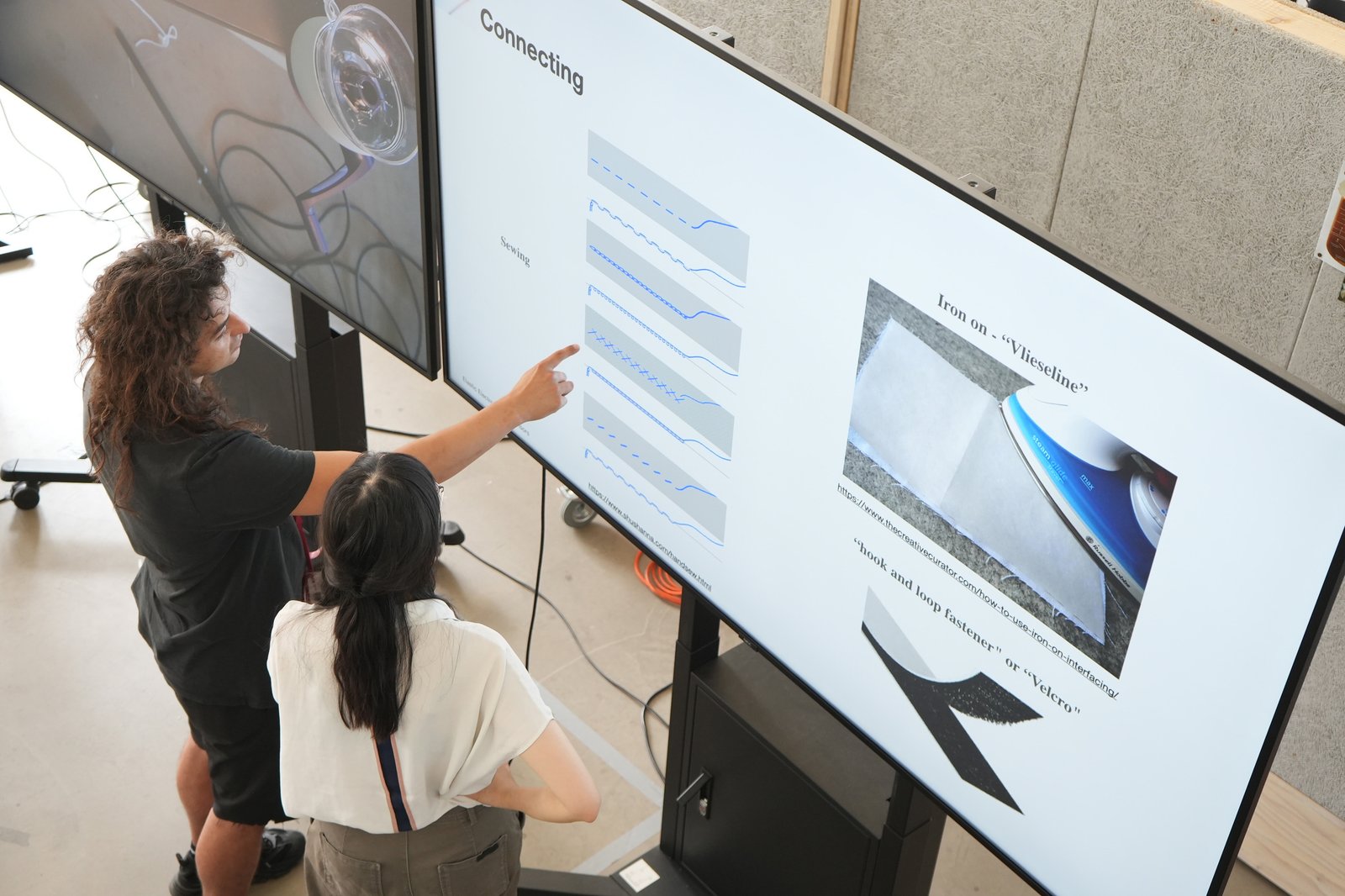
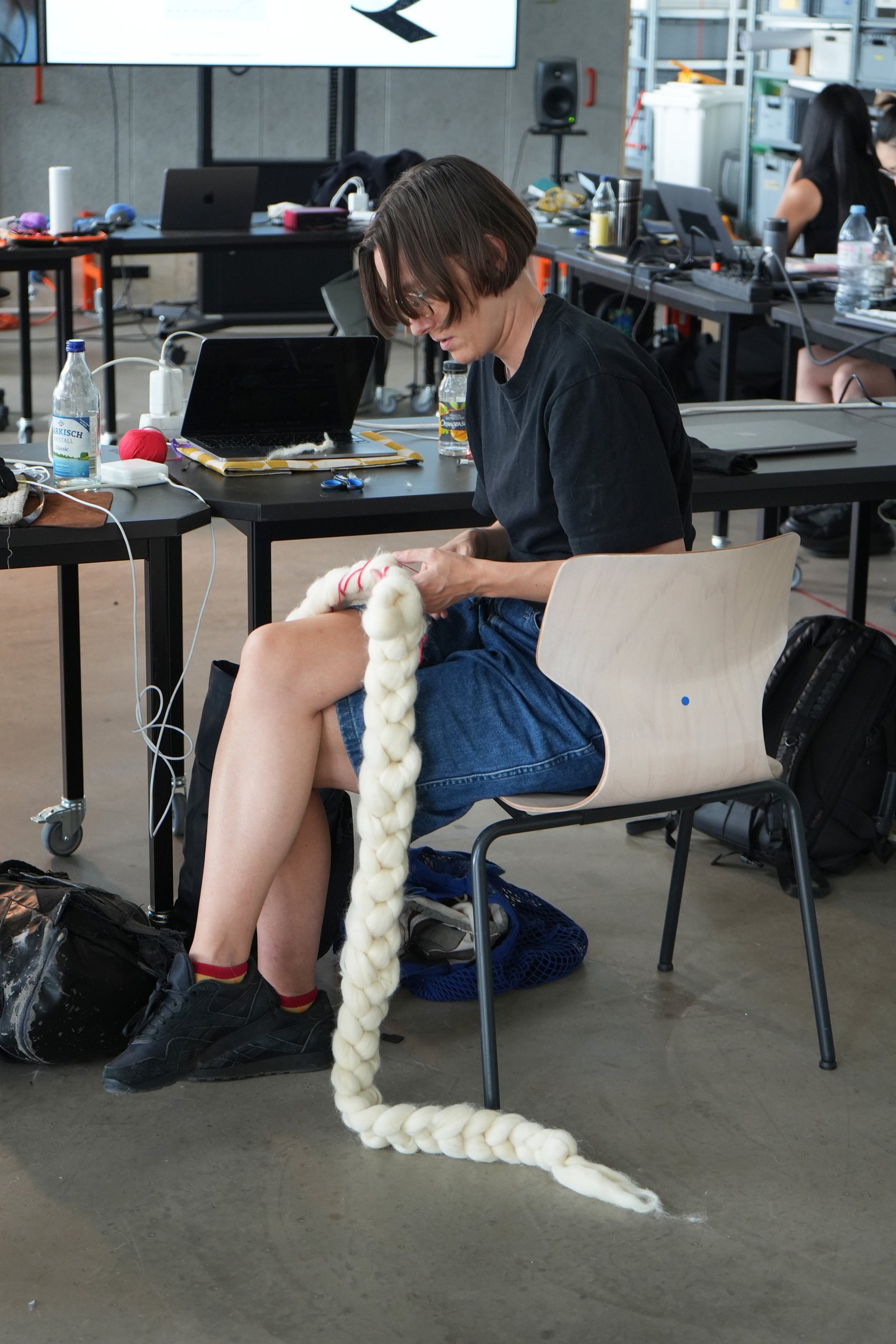
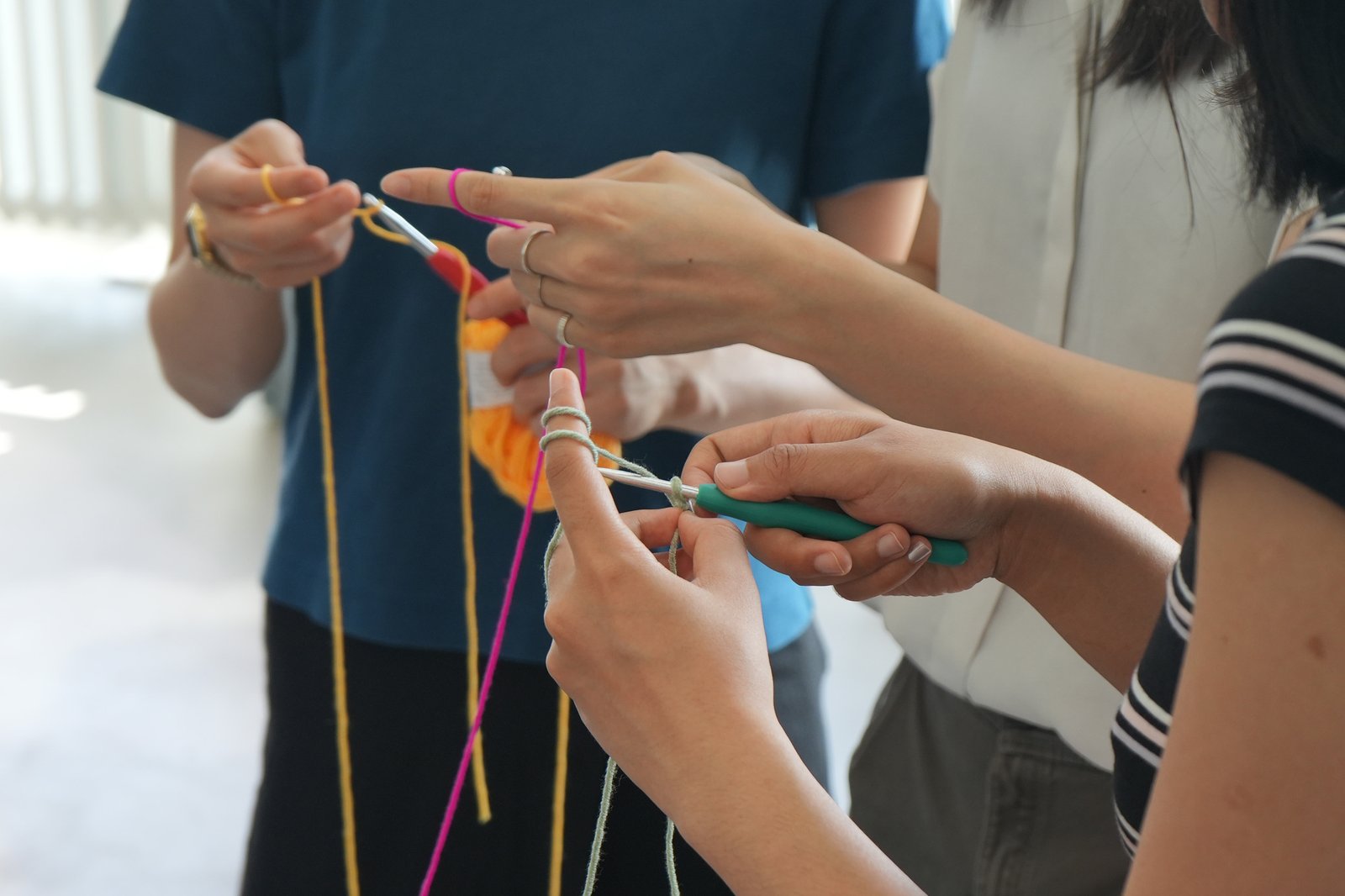
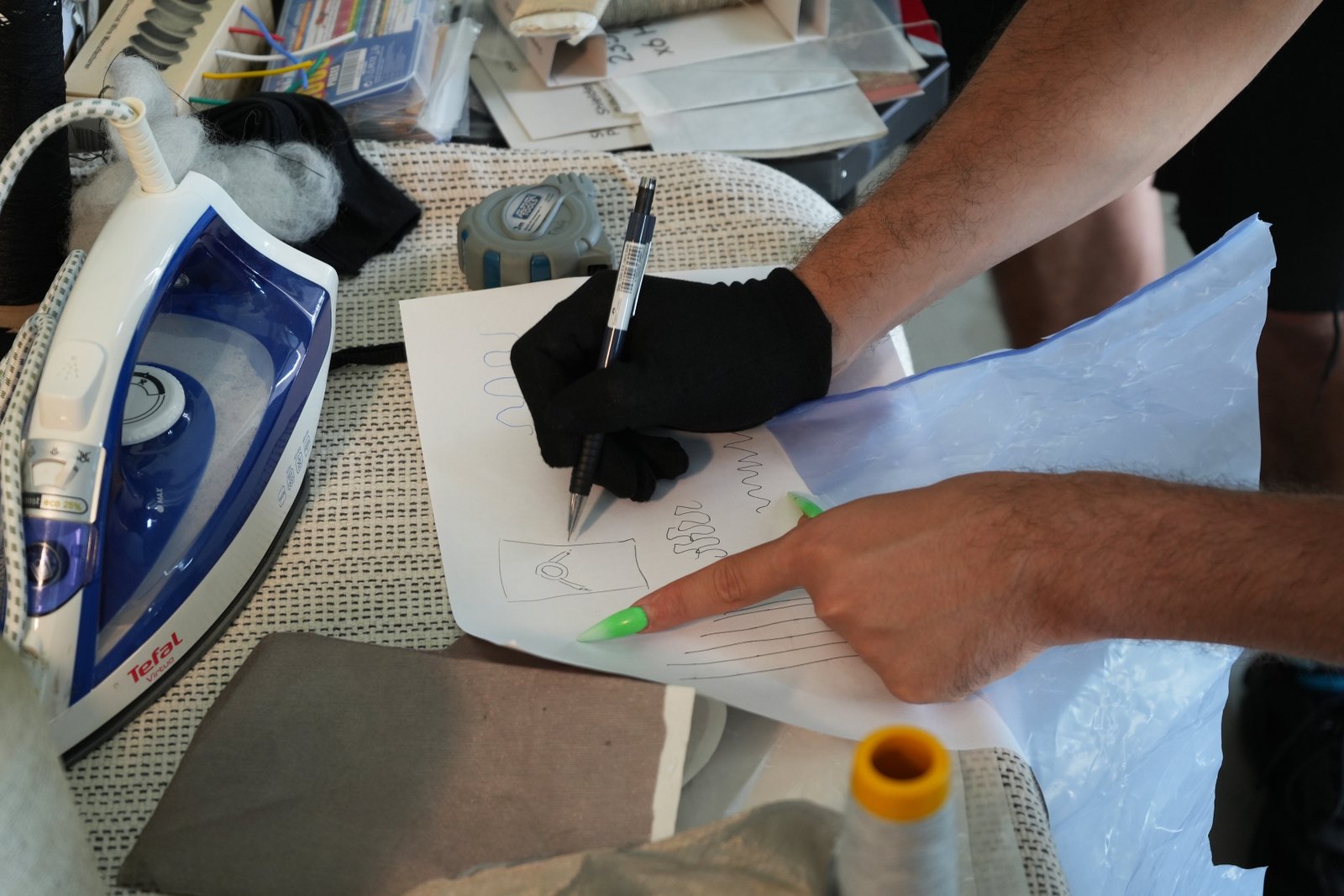
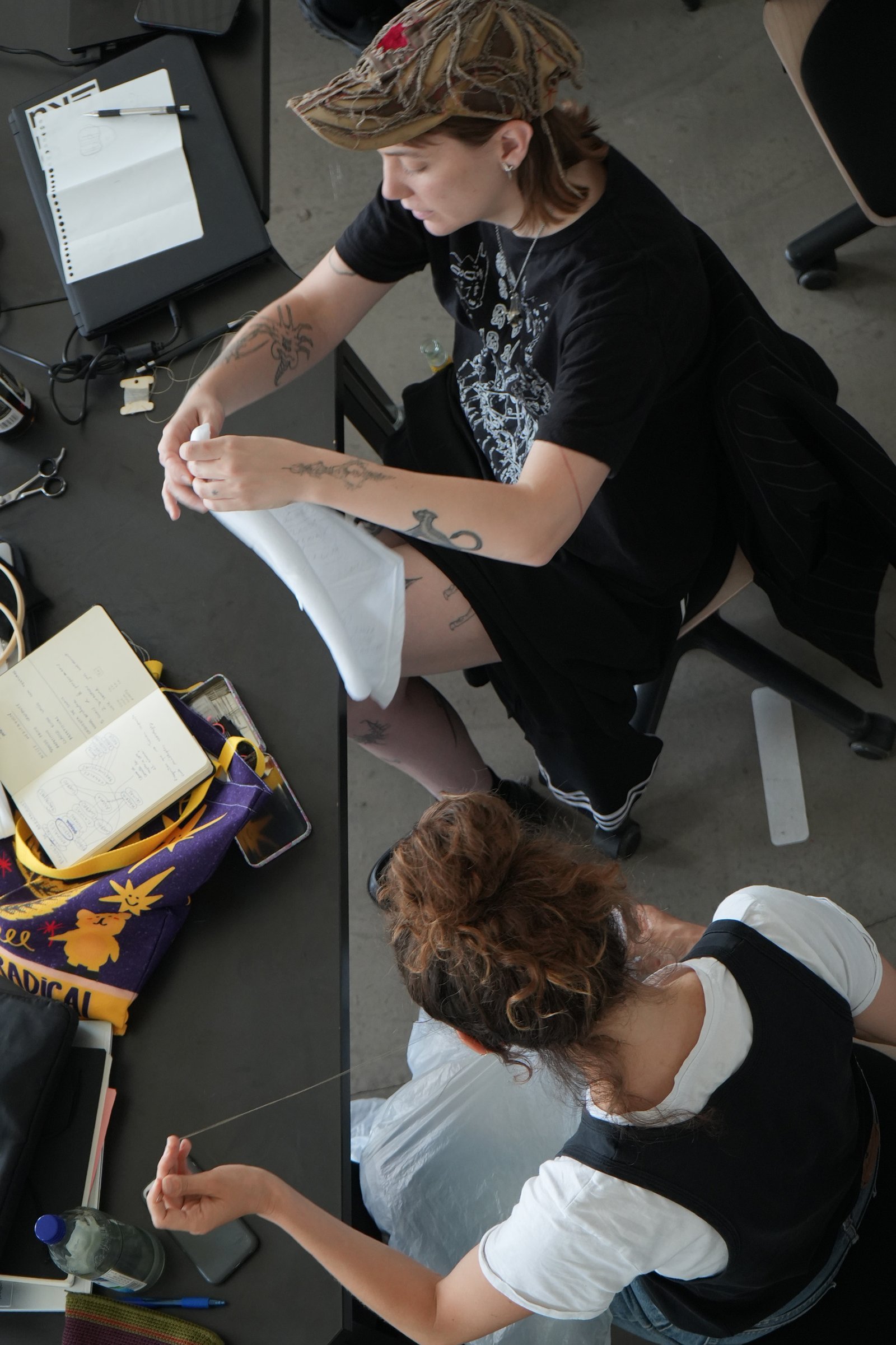
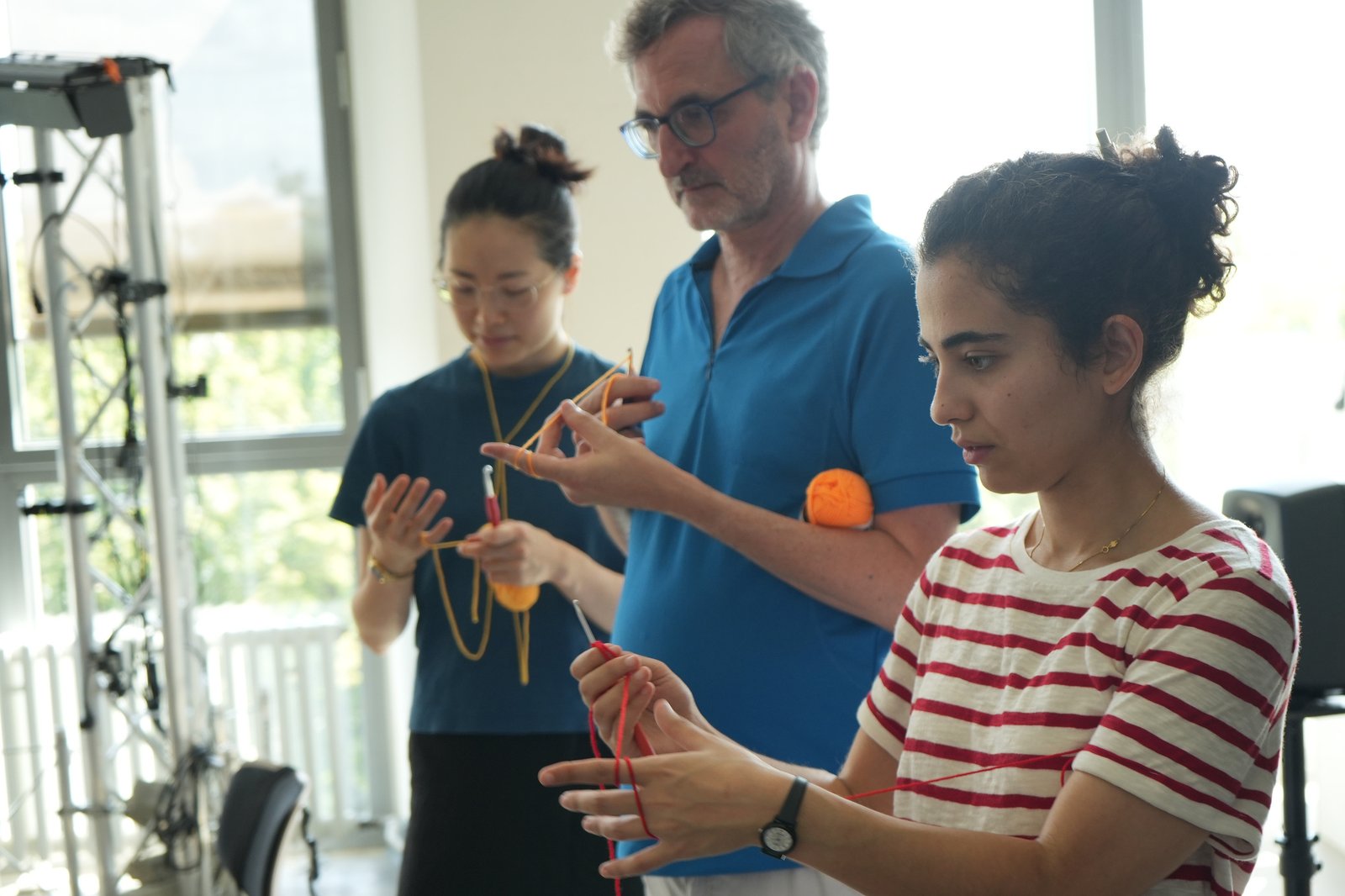
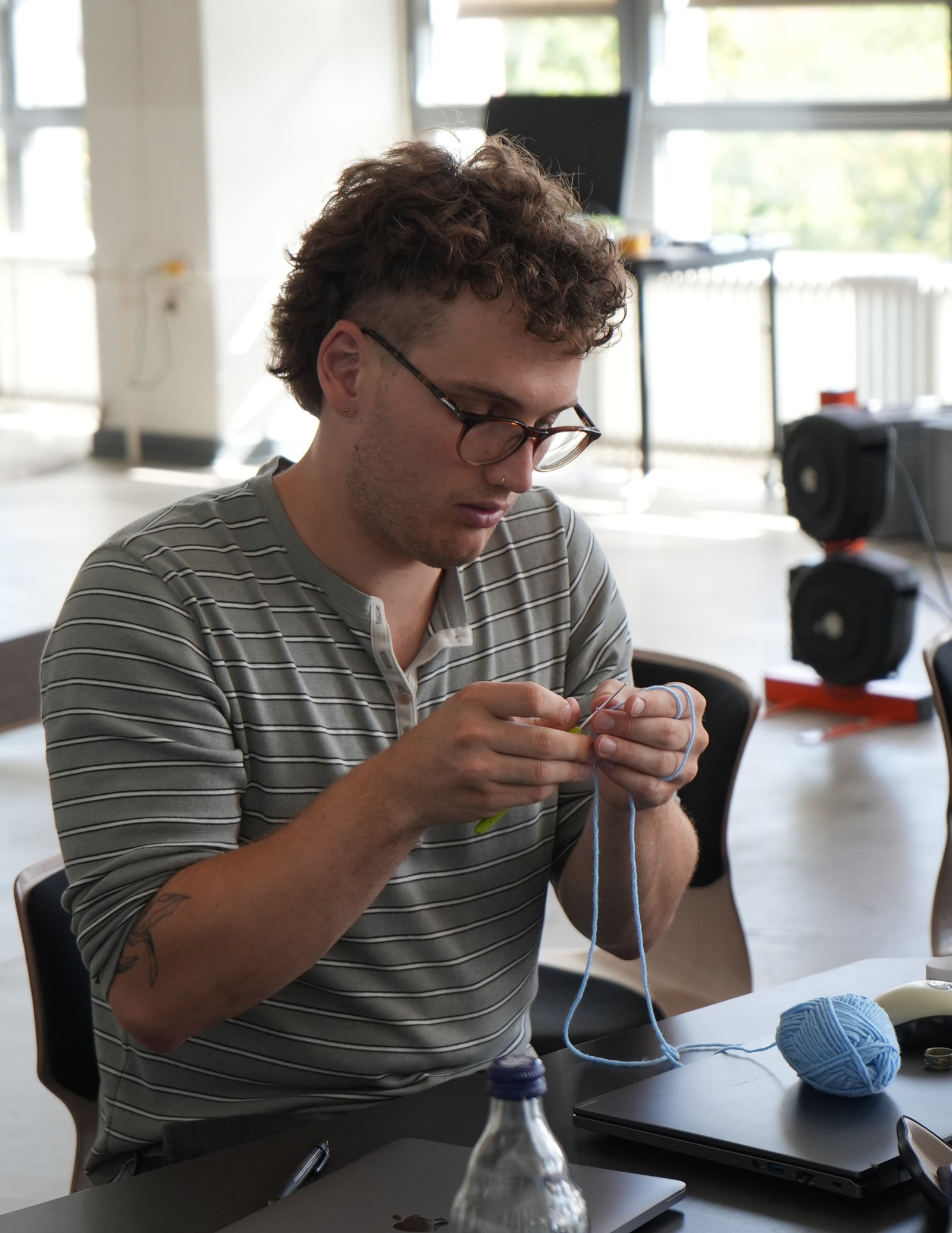
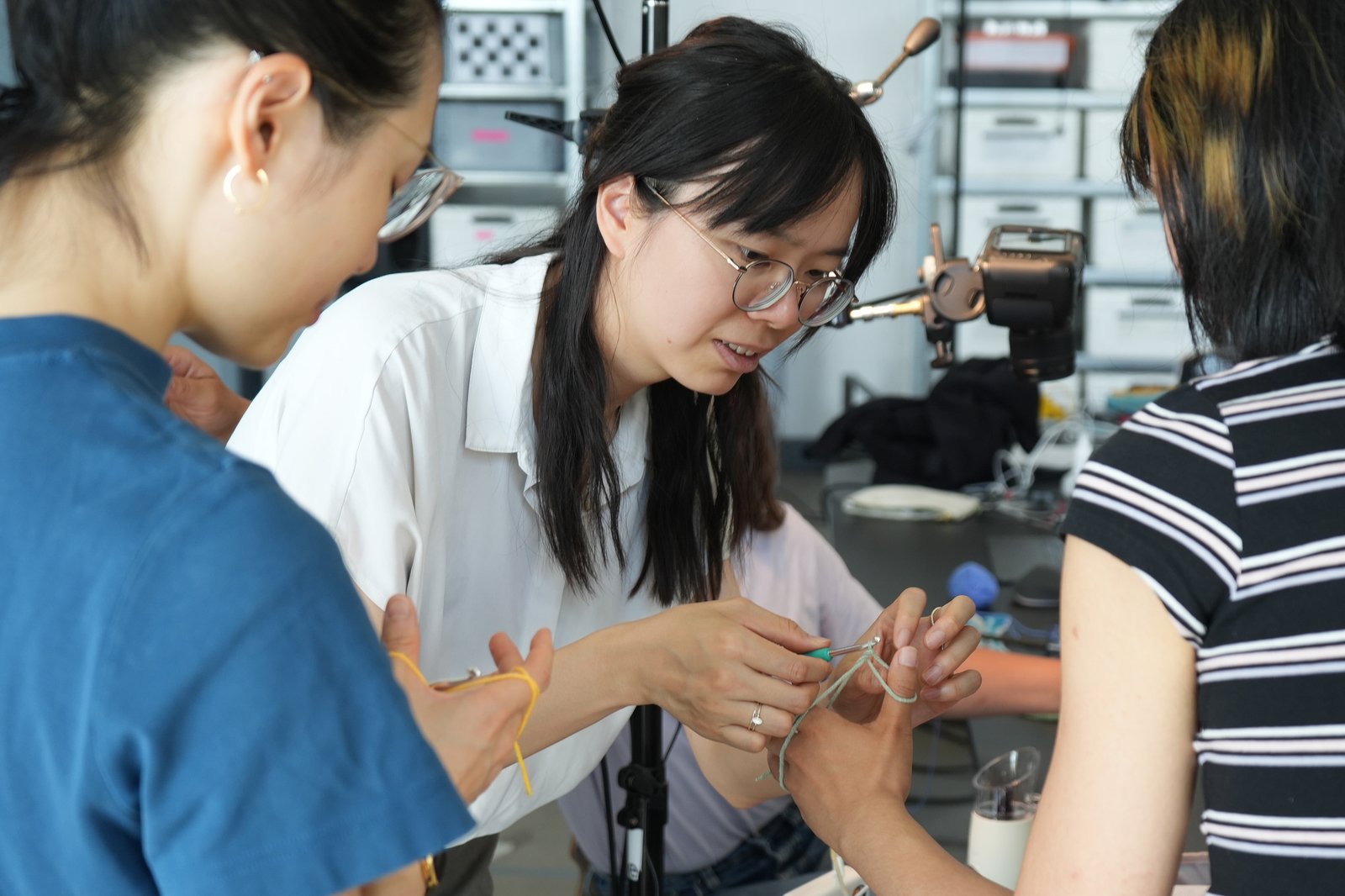
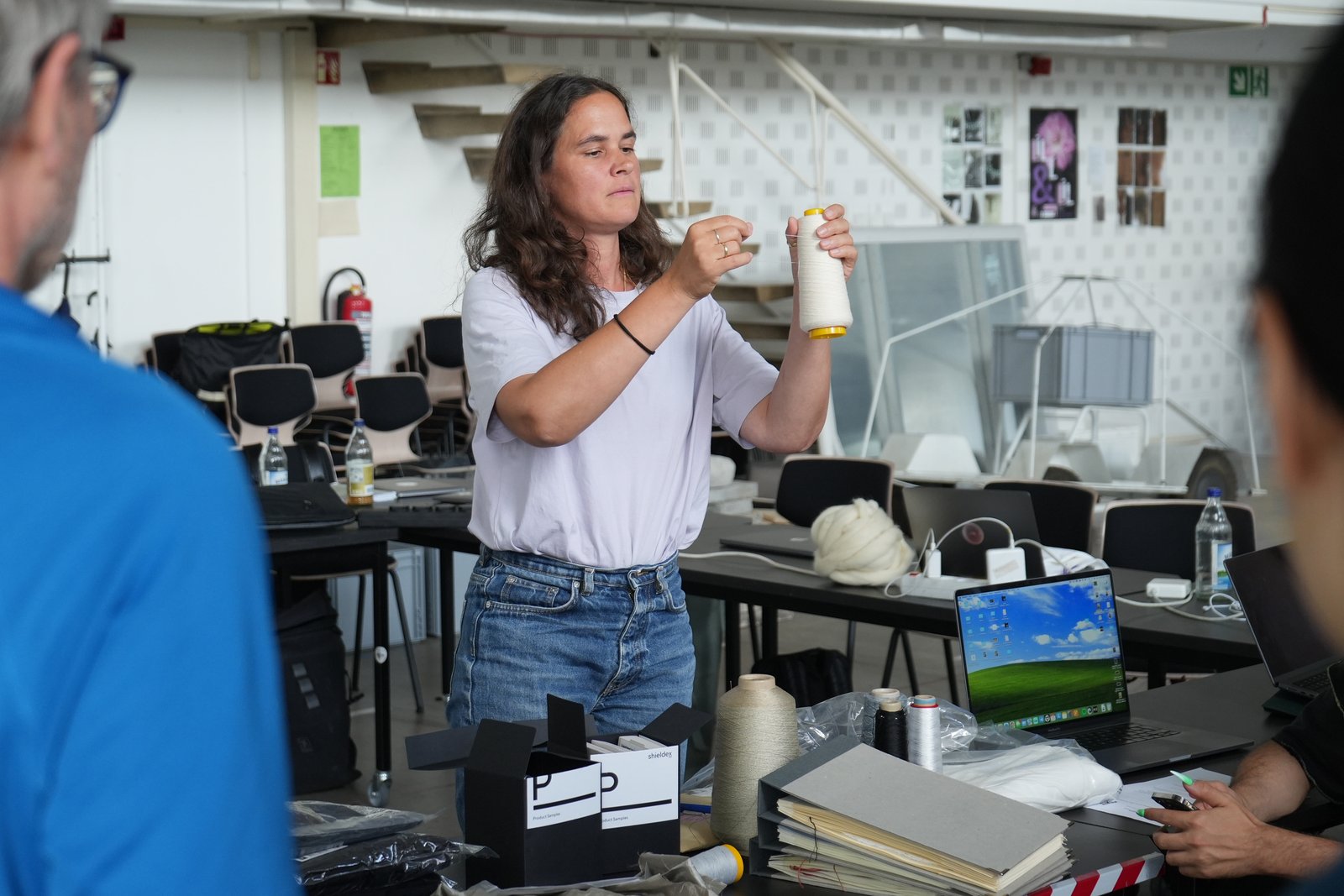
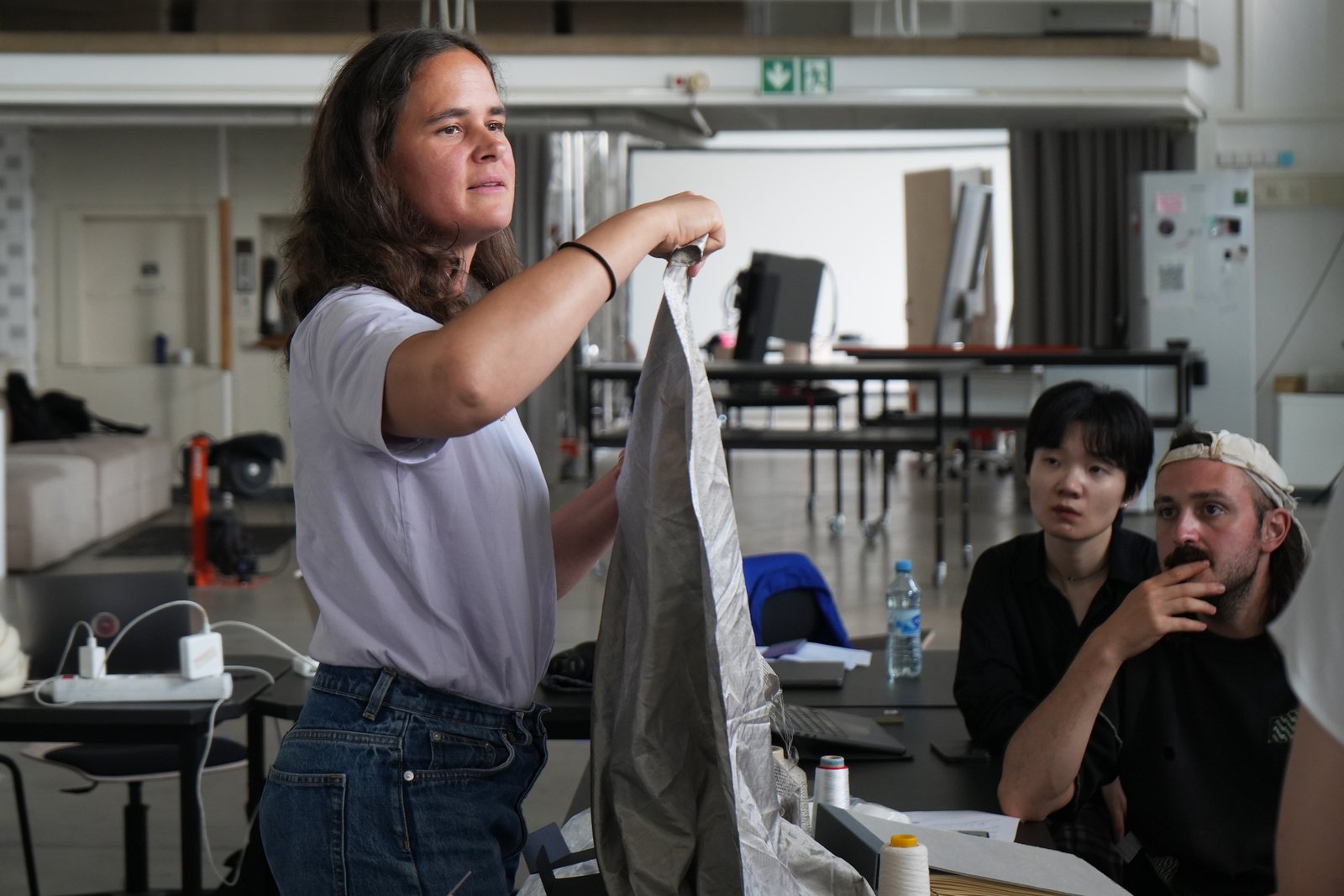
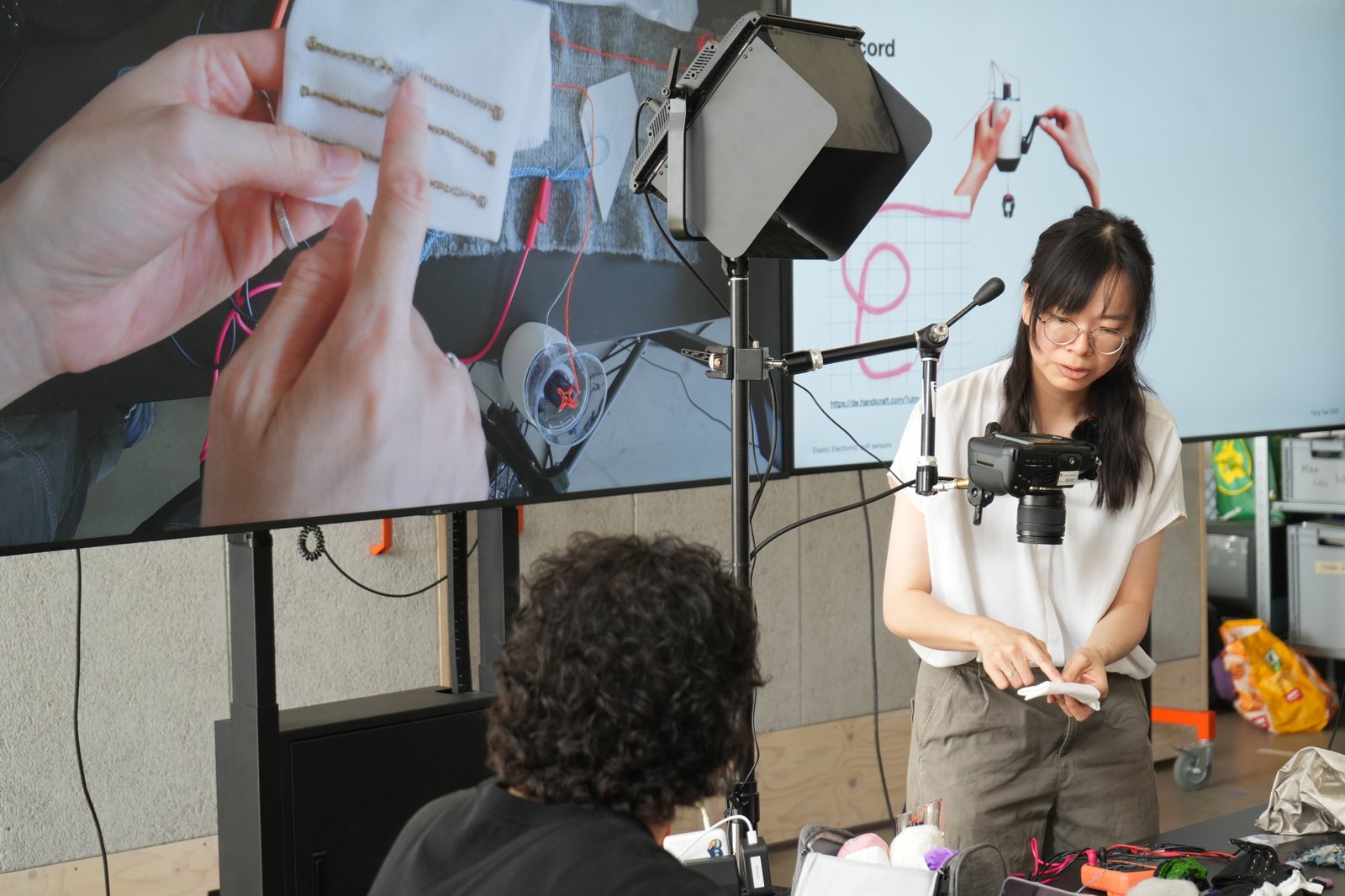
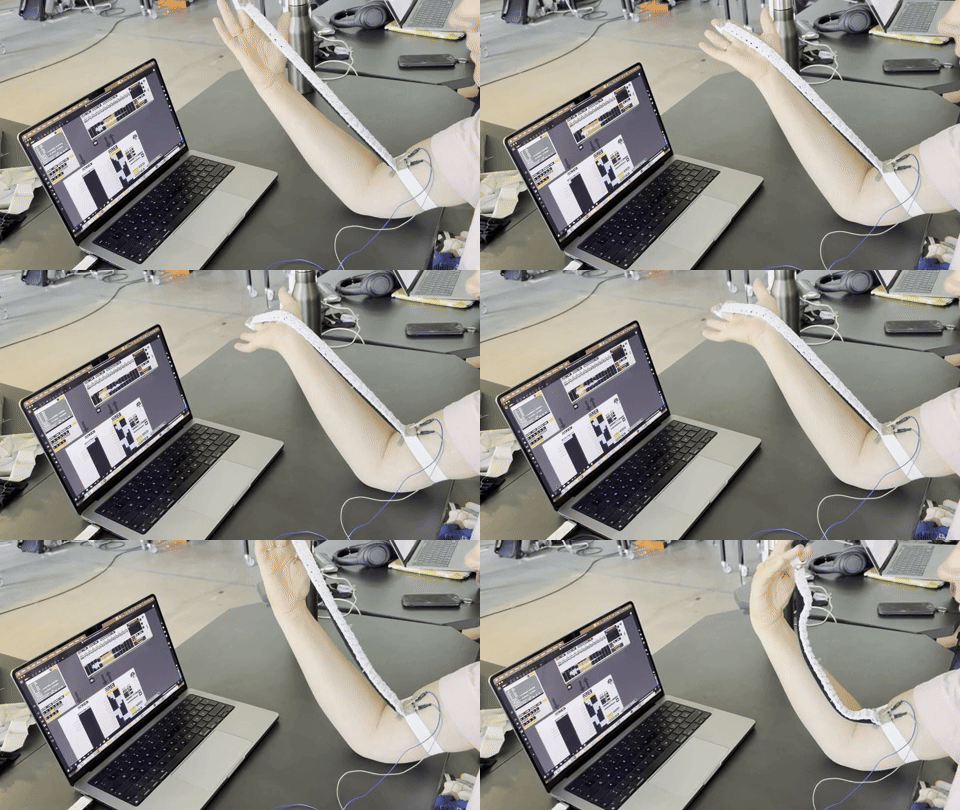
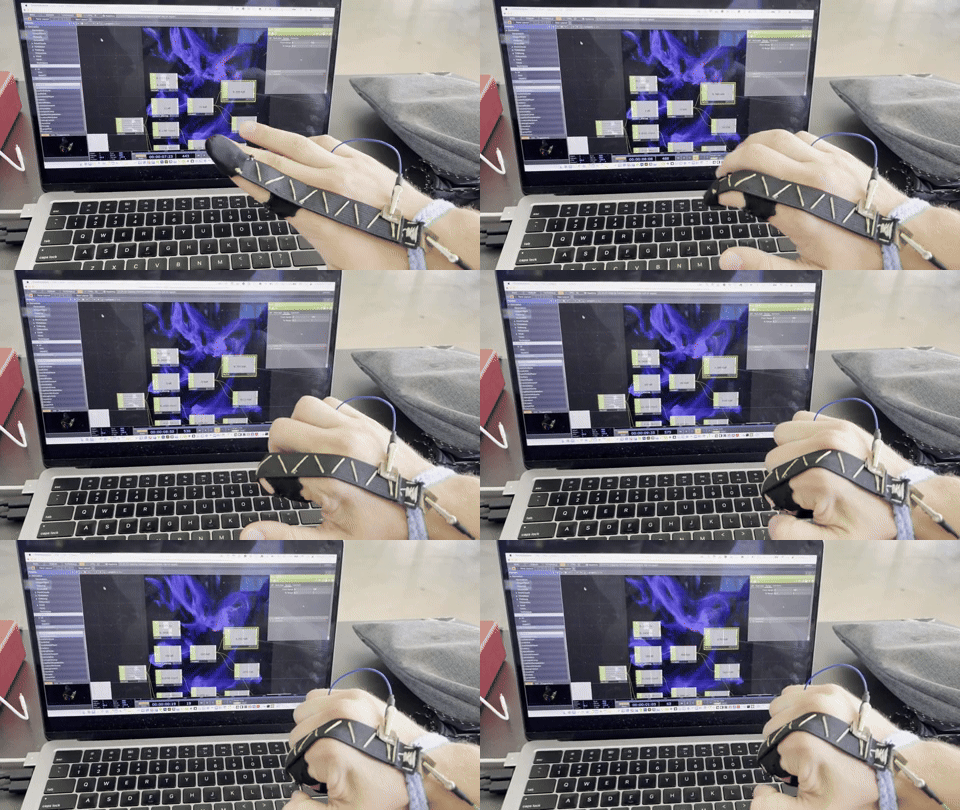
Guided by Magdalena Kohler, participants explored the properties of knitted textiles and different types of fibers, from natural materials like wool and cotton to synthetics such as polyamide and polyester, including conductive threads. Using sewing, knitting, crocheting, and I-cord techniques, they created soft sensors that transformed bodily movement into measurable electronic signals, embedding digital interaction within traditional craft practices.
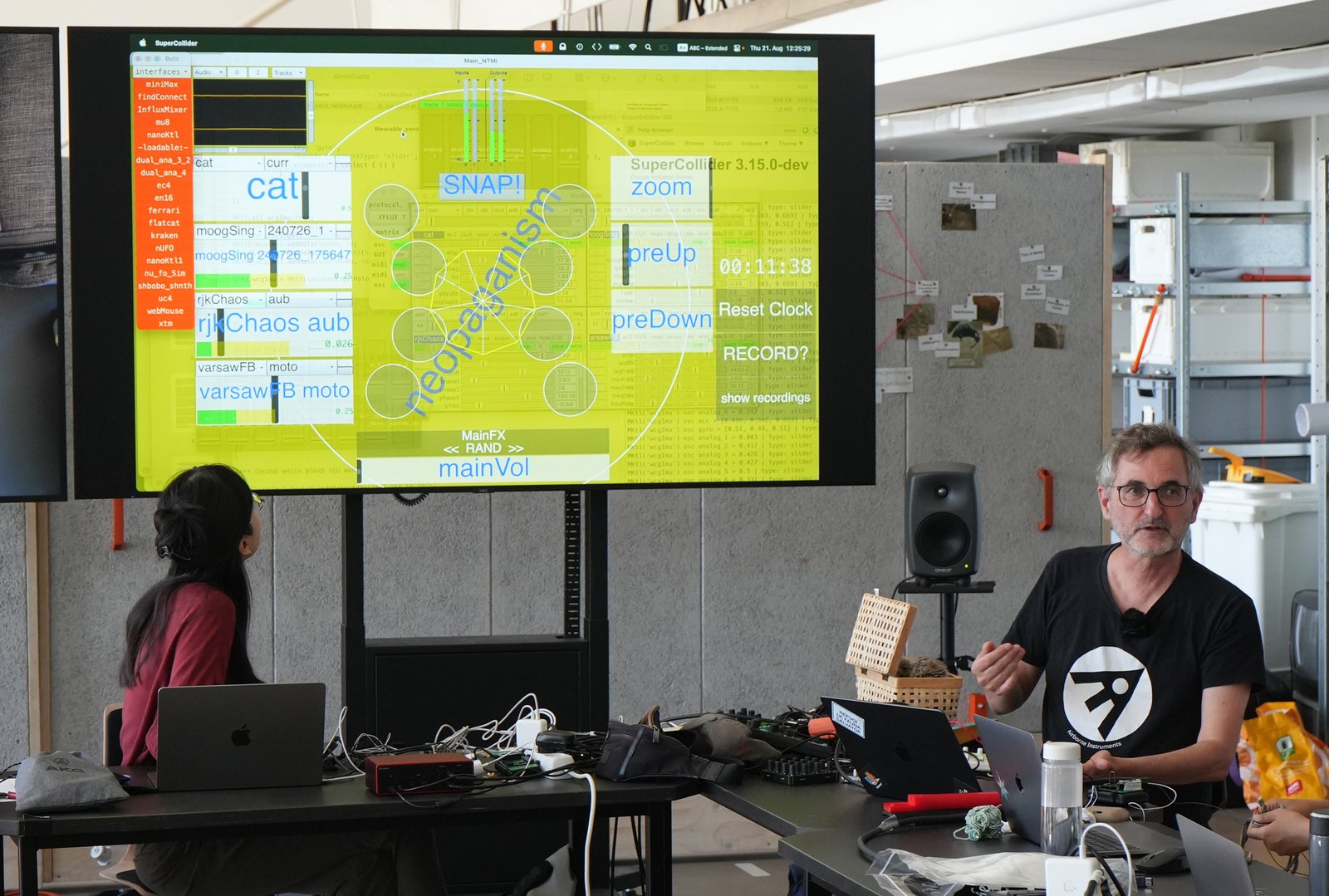
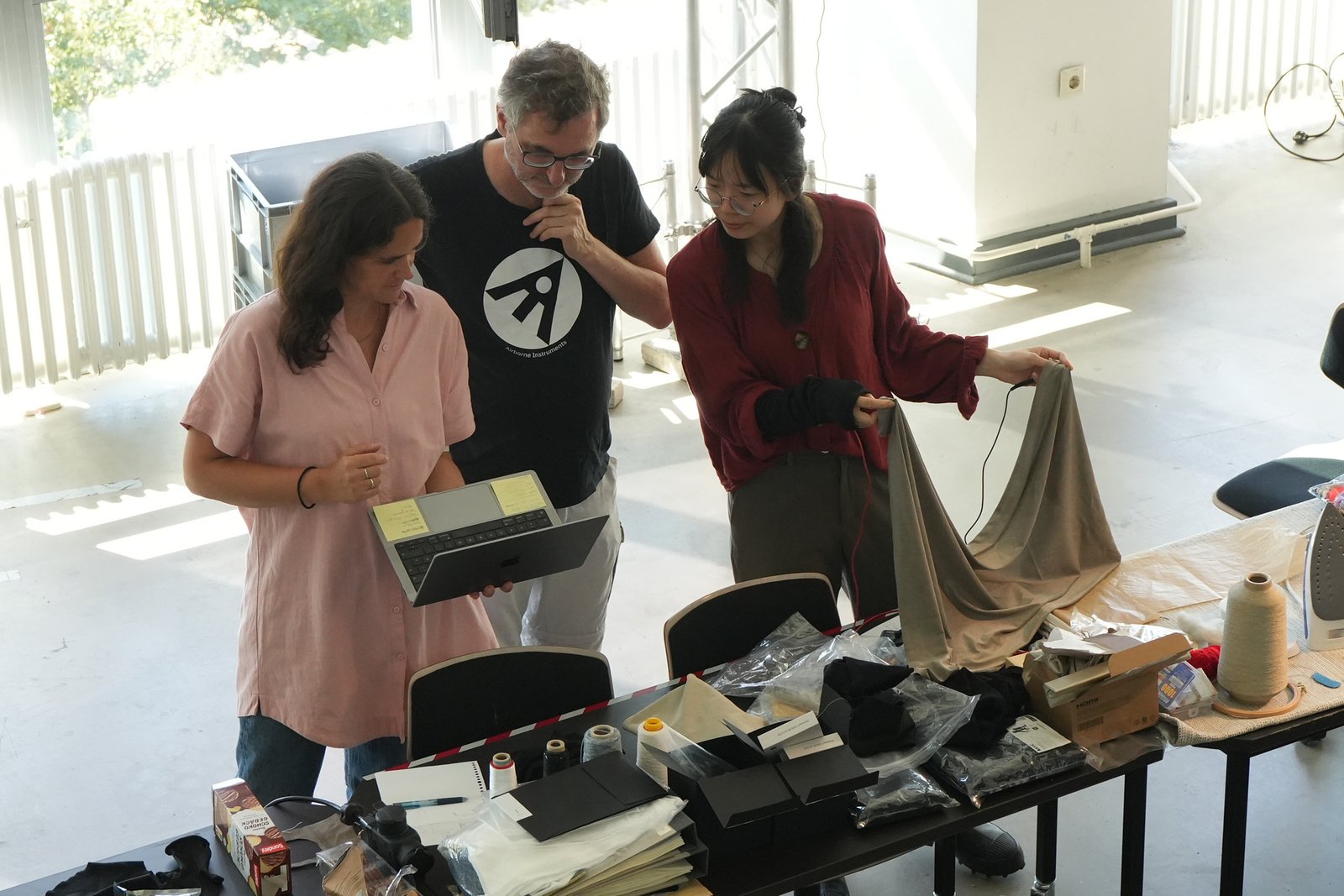
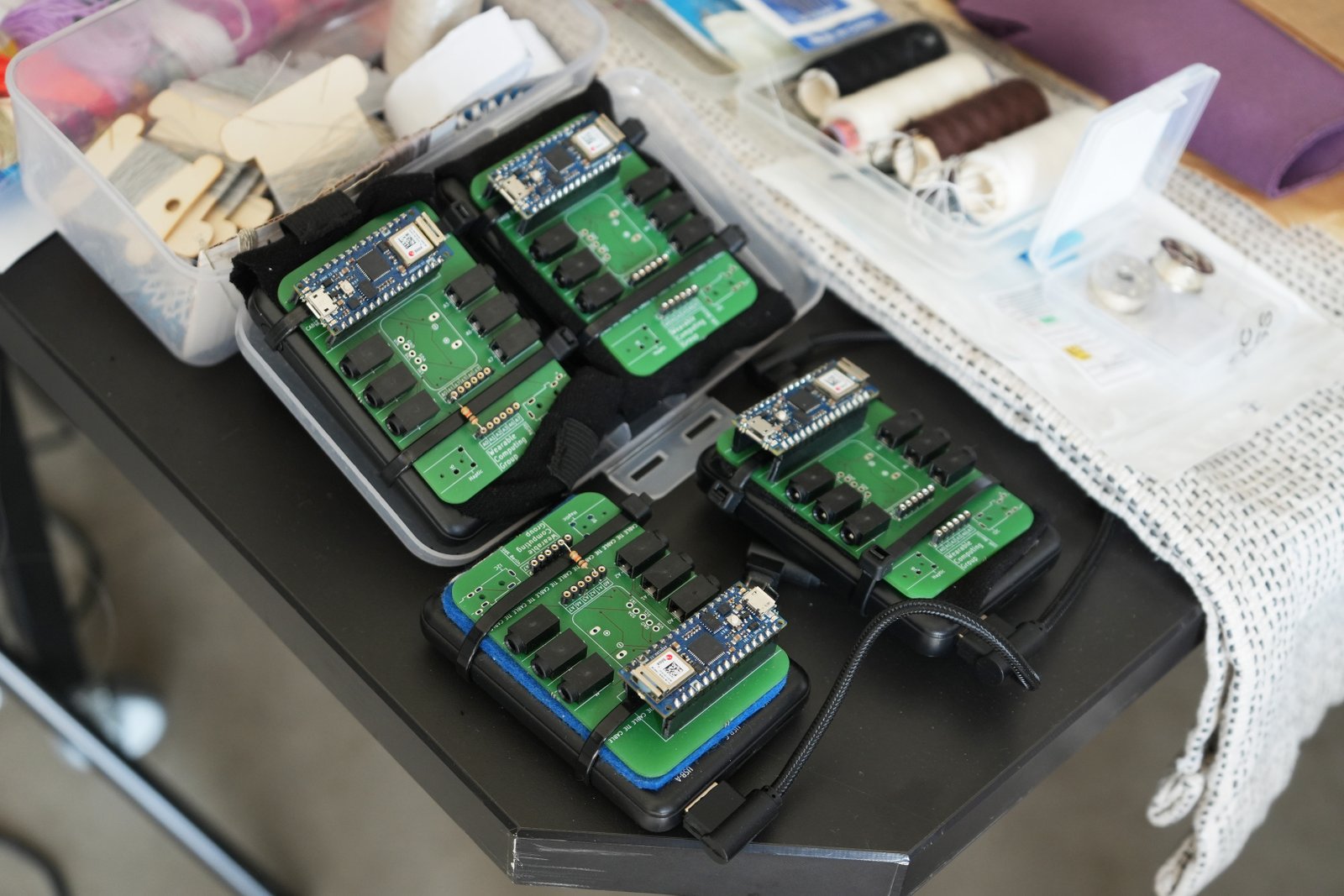
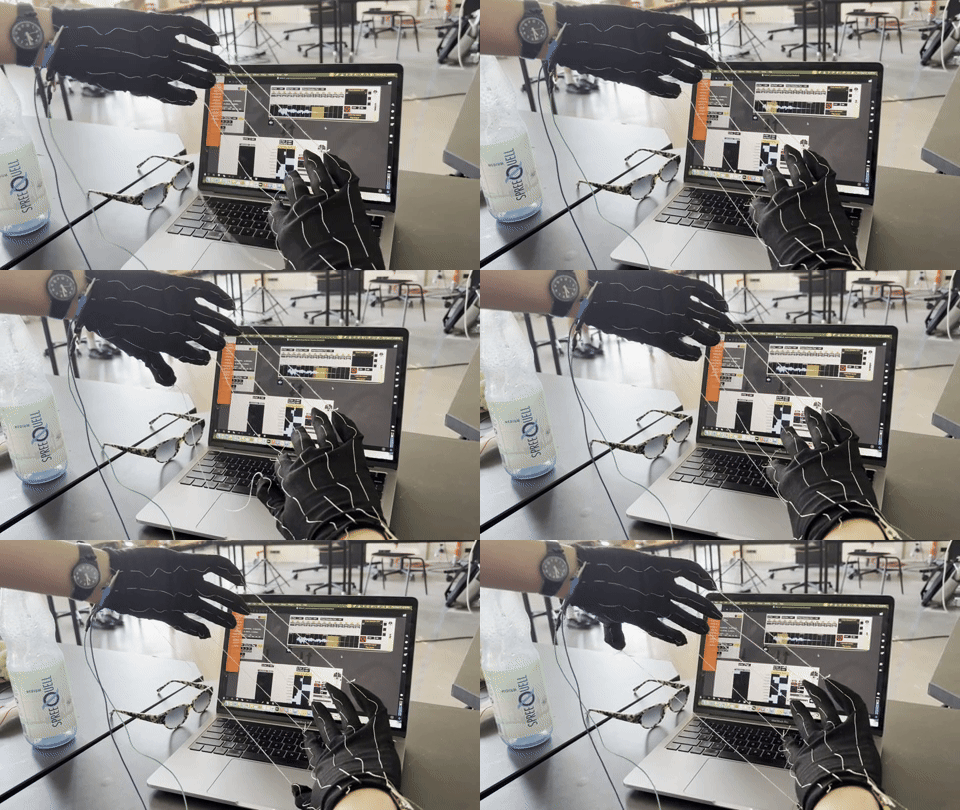
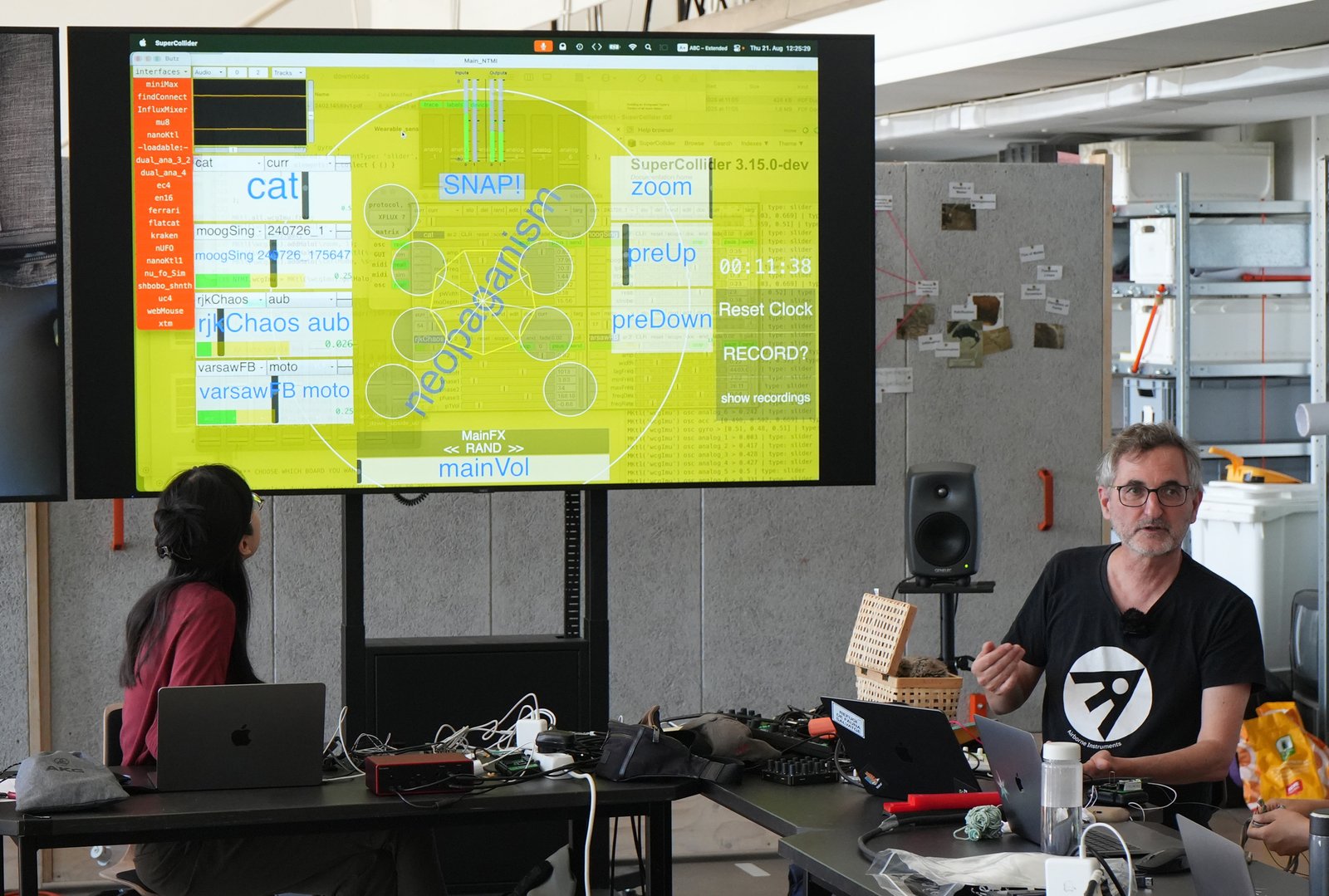
On the second day, the sensors were connected to microcontrollers with custom expansion boards developed by Berit Greinke and Federico Visi. The signals were transmitted to computers and mapped to sound in Max and SuperCollider, enabling participants to explore interactive sonic responses.
The workshop emphasized experimentation over technical precision, transforming the studio into a space of improvisation, where gestures, materials, and sound converged into performative and creative experiences.
Photo credit | Beril Ece Güler